
Website Maintenance Cost Per Year: What a Website Really Costs to Keep Running
Last updated: July 18, 2026 · By Joseph Olivas, Founder, MEAN Consultors · 8 min read
Almost every quote I write includes a line for annual maintenance, and it is almost always the number clients skip past on the way to the build cost. That is a mistake. A website is not a one-time purchase like a logo; it is closer to a vehicle — the price on the sticker is only the beginning, and neglecting the upkeep is how a fast, secure, revenue-generating site quietly turns into a slow, hacked liability. Here is exactly what website maintenance costs per year, what drives the number up or down, and where the money actually goes.
What Website Maintenance Costs Per Year by Site Type
There is no single price because “a website” can mean a five-page brochure or a transactional platform processing thousands of orders. The honest answer is a range tied to complexity. The figures below reflect what we typically see across U.S. small and mid-size businesses, combining third-party services (hosting, licenses) with the human time to keep everything current. If you want a build-cost baseline first, our web development team scopes both the upfront and ongoing numbers together so there are no surprises in year two.
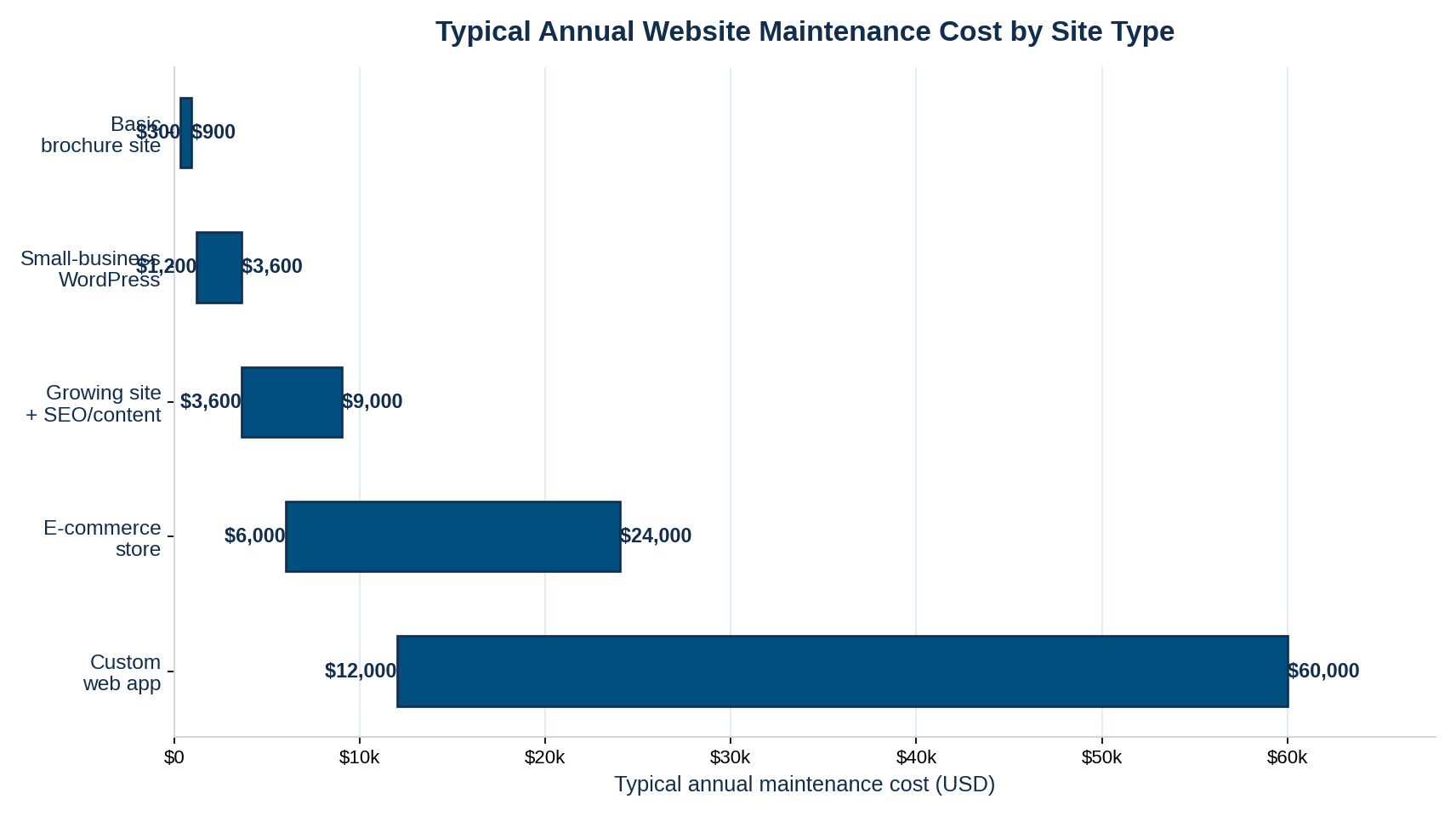
Figure 1: Typical annual website maintenance cost ranges by site type (MEAN Consultors estimates, 2026).
| Site type | Annual maintenance | What’s driving the cost |
|---|---|---|
| Basic brochure site | $300 – $900 | Hosting, SSL, occasional plugin updates |
| Small-business WordPress | $1,200 – $3,600 | Updates, backups, security, light content edits |
| Growing site + SEO/content | $3,600 – $9,000 | Ongoing content, on-page SEO, performance tuning |
| E-commerce store | $6,000 – $24,000 | Payment/security compliance, integrations, uptime |
| Custom web application | $12,000 – $60,000 | Dedicated dev support, infrastructure, feature work |
- Most small-business sites land between $1,200 and $3,600 per year once hosting, security, and light upkeep are included.
- E-commerce roughly doubles the cost of a comparable brochure site because of payment security, compliance, and uptime demands.
- The biggest variable is not software — it is how much human time goes into content, SEO, and fixes.
Where the Annual Maintenance Budget Actually Goes
Owners often assume hosting is the main recurring cost. In practice, hosting is one of the smallest line items. When we break down a typical maintenance retainer, the largest share by far is the ongoing human work — content updates, SEO upkeep, and the developer time to fix things and ship small improvements. The chart below shows how a representative annual budget divides across the six recurring categories.
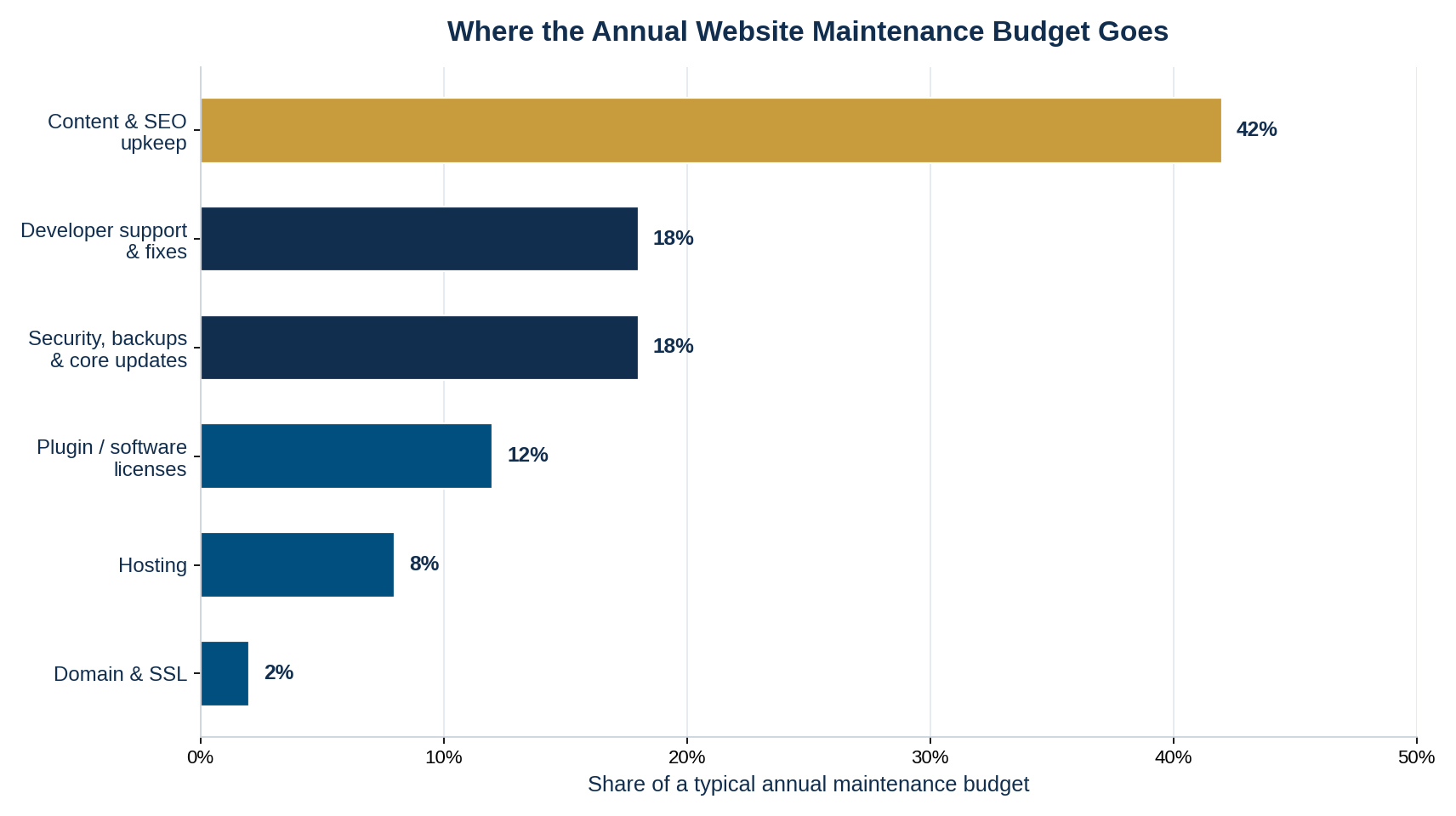
Figure 2: Share of a typical annual website maintenance budget by category (MEAN Consultors estimate).
The line items you are actually paying for
- Hosting (~8%): Managed hosting for a business site runs roughly $120–$600 a year; cheap shared plans cost less but pay it back in downtime.
- Domain & SSL (~2%): A domain is $12–$25 a year and SSL is often free through your host — but a valid certificate is non-negotiable, because Google treats HTTPS as a ranking signal.
- Security, backups & core updates (~18%): Plugin, theme, and CMS updates plus off-site backups and malware monitoring. Skipping this is the single most common cause of a hacked site.
- Plugin & software licenses (~12%): Premium plugins, page builders, forms, and SEO tools that renew annually.
- Content & SEO upkeep (~42%): New pages, blog posts, and on-page optimization — the work that actually grows traffic over time.
- Developer support & fixes (~18%): Bug fixes, browser-compatibility issues, and small feature improvements.
What Drives the Number Up (and Down)
Two businesses with similar-looking sites can pay very different amounts. The variables that move the price most are the platform you are on, how much content you publish, whether you sell online, and how much of the work you keep in-house. A WordPress site — which now powers a large share of the web, roughly 43% of all sites per W3Techs — is inexpensive to host but needs disciplined updates because its plugin ecosystem is a frequent attack surface. A hand-coded or headless site may cost more per developer hour but needs fewer routine security patches. If you are weighing platforms, our breakdown of WordPress vs. a custom-coded website walks through the long-run cost trade-offs in detail.
The other big lever is neglect. Deferred maintenance is not free — it accrues. A site that goes a year without updates typically needs a paid “catch-up” project before it can be safely updated again, and a security cleanup after a hack routinely runs several times the annual maintenance it would have replaced.
DIY, Freelancer, or Agency: What Each Really Costs
You have three realistic ways to handle maintenance, and the “cheapest” option on paper is rarely the cheapest in practice once you price your own time.
| Approach | Typical annual cost | Best for |
|---|---|---|
| DIY (owner handles it) | $200 – $800 + your time | Simple sites, owners comfortable with WordPress |
| Freelancer, ad hoc | $1,000 – $4,000 | Occasional edits, non-critical sites |
| Agency retainer | $2,400 – $12,000+ | Revenue-generating sites needing uptime & SEO |
The break-even is usually about whether your website makes you money. If the site is a digital brochure, DIY or a freelancer is fine. If it generates leads or sales, the downtime and lost-ranking risk of an unmaintained site almost always justifies a retainer.
Frequently Asked Questions
How much does website maintenance cost per year for a small business?
For a typical small-business WordPress site, expect $1,200 to $3,600 per year. That covers managed hosting, SSL, regular security and plugin updates, off-site backups, and a few hours of monthly edits or fixes. Sites that also publish content and invest in SEO tend to land in the $3,600–$9,000 range.
Is website maintenance a one-time or recurring cost?
It is recurring. Hosting, domain, and SSL renew annually, software needs continual updates, and security is an ongoing responsibility, not a one-time setup. Treating maintenance as a one-time cost is the most common budgeting mistake we see.
What happens if I don’t maintain my website?
Unmaintained sites accumulate outdated software with known vulnerabilities, which is the leading cause of hacked business websites. You also risk broken features after browser updates, slower load times, and gradual loss of search rankings. The cleanup cost after a problem is almost always higher than the maintenance would have been.
Does website maintenance include SEO?
It can, but not always. Basic maintenance (updates, backups, security) keeps the site running. SEO upkeep — new content, on-page optimization, technical fixes — is what grows traffic. Many owners bundle the two, and in our experience content and SEO work is the largest and highest-return slice of the annual budget.
How much should I budget for maintenance relative to my build cost?
A reliable rule of thumb is 15–20% of the original build cost per year. So a $10,000 website should carry roughly $1,500–$2,000 in annual maintenance. Complex or e-commerce sites often run higher because of compliance and uptime requirements.
MEAN Consultors builds and maintains fast, secure websites for U.S. businesses — with clear, predictable annual pricing.