
How Much Does a Custom Website Cost in 2026? Full Pricing Breakdown
Last updated: July 9, 2026 · By Joseph Olivas, Founder, MEAN Consultors · 10 min read
This guide breaks down what a custom website actually costs in 2026, why two quotes for what sounds like “the same website” can differ by tens of thousands of dollars, and how to budget for the total cost of ownership rather than just the sticker price of the build. It’s written for business owners and marketing leads who are collecting quotes right now and want a framework for judging whether a number is reasonable — not just a list of prices with no context for what drives them.
Custom Website Cost Ranges in 2026 (At a Glance)
If you’ve requested a few quotes for a new website, you’ve probably noticed the numbers don’t agree with each other. One developer quotes $3,000, another quotes $40,000, and you’re left wondering whether you’re being overcharged or under-scoped. The truth is that both quotes can be correct — they’re just pricing different things.
Here’s how custom website development pricing actually breaks down in 2026, based on current industry pricing data:
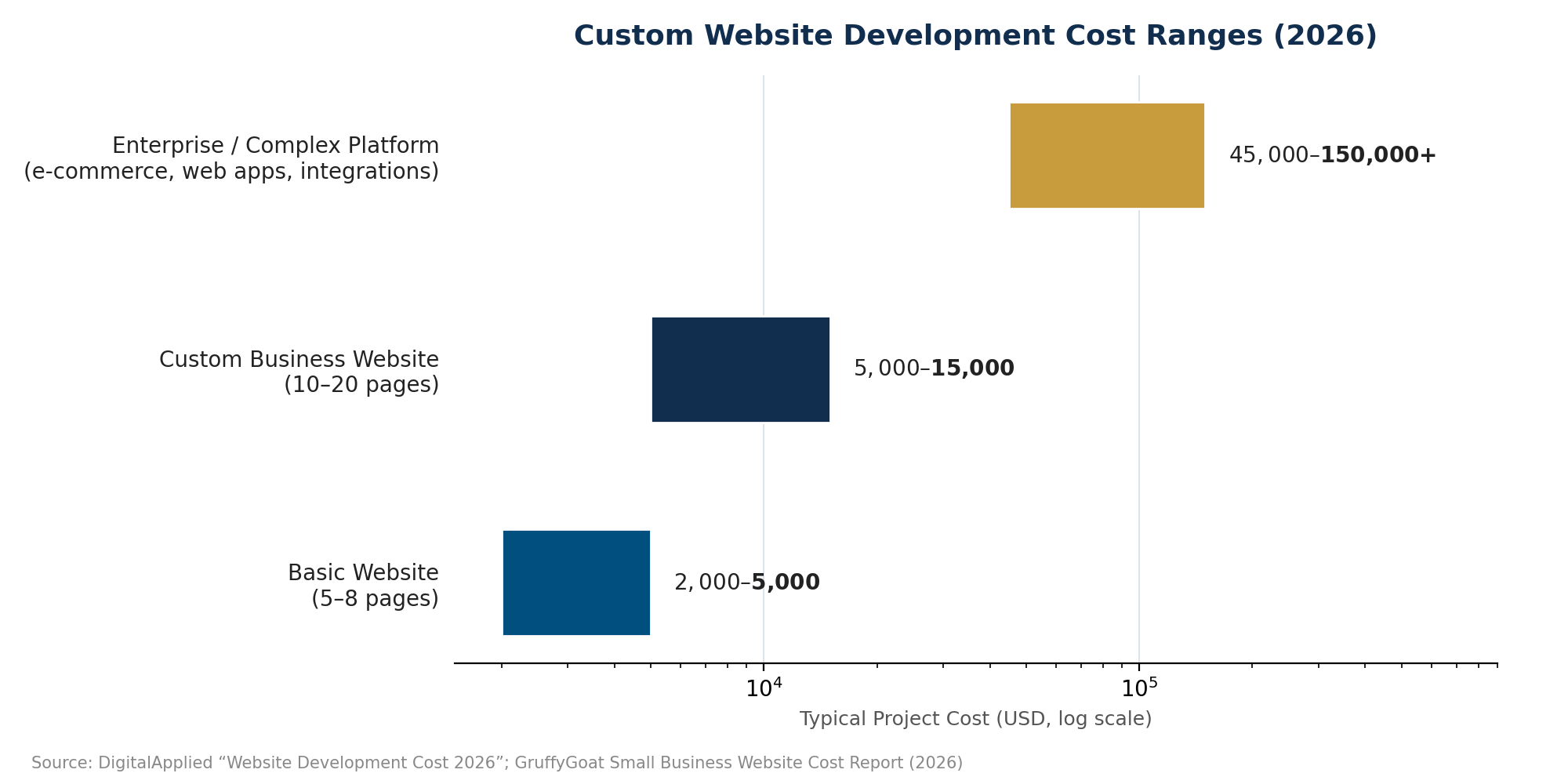
Figure 1: Typical custom website cost ranges by project type, 2026.
| Project Type | Typical Cost | Best For |
|---|---|---|
| Basic website (5–8 pages) | $2,000 – $5,000 | Solo practitioners, simple service pages |
| Custom business website (10–20 pages) | $5,000 – $15,000 | Established small-to-mid businesses |
| Enterprise / complex platform | $45,000 – $150,000+ | E-commerce, custom web apps, ERP-integrated portals |
- 61% of small businesses spent under $10,000 on their most recent website project — but that share is shrinking as buyers demand more custom design.
- Custom backend development, advanced UI/UX, and third-party integrations are the three factors most likely to push a project over its original estimate.
- The sticker price of a website is rarely the full cost — hosting, maintenance, and content updates typically add 100–200% over three years.
Basic Websites (5–8 pages): $2,000–$5,000
A basic website is the right fit when your goal is simple: tell people who you are, what you do, and how to contact you. Think a landing page, an about page, a services overview, and a contact form. At this tier, you’re mostly paying for templated design work, light customization, and basic on-page SEO setup rather than custom-coded functionality.
This tier makes sense for new businesses validating an idea, solo consultants, or a temporary placeholder while a larger project is being scoped. It’s rarely the right long-term home for a business that depends on its website to generate leads, because there’s little room to add the conversion features (booking systems, gated resources, dynamic content) that turn traffic into revenue.
Custom Business Websites (10–20 pages): $5,000–$15,000
This is where most established small and mid-sized businesses land, and it’s also where quotes start to vary the most — because “custom” can mean very different things depending on the agency. At MEAN Consultors, a project in this range typically includes:
- Custom design (not a stock template) built around your brand and conversion goals
- 10–20 unique pages, including dedicated service or product pages
- On-page SEO foundations: proper heading structure, schema markup, and internal linking
- A CMS your team can actually update without calling a developer every time
- Mobile-first, Core Web Vitals-conscious front-end code
Custom copywriting and image direction alone typically add $2,000–$5,000 on top of the design and build — which is why two “custom website” quotes covering the same page count can still differ by thousands of dollars.
Enterprise & Complex Platforms: $45,000–$150,000+
Once a website needs to do more than present information — process payments, manage a product catalog, sync with an ERP, or serve as a customer-facing portal — you’ve moved from “website” to “web application,” and the pricing model changes accordingly. Full custom e-commerce builds on headless architectures, for example, typically run $45,000–$250,000 depending on catalog complexity and how many systems it needs to talk to.
We’ve built platforms in this tier for clients who needed more than a content site. In one engagement, we built a custom order management portal for a durable medical equipment (DME) distributor that needed to replace a manual, spreadsheet-driven process — the resulting system cut order management time by more than 30%. That’s a software development project wearing a website’s clothing, and it’s priced like one. If that sounds like your situation, it’s worth reading how we approach custom software development alongside web development, since the two disciplines usually overlap at this tier.
What Actually Drives the Price Up (or Down)
Once you understand the three tiers above, the next useful question is: what moves a project from the bottom of a range to the top? In our experience scoping dozens of projects, it comes down to a short list of factors:
- Custom functionality — booking systems, gated content, member portals, and calculators all add development hours a template can’t absorb.
- Third-party integrations — connecting your CRM, payment processor, or inventory system is usually the single biggest driver of scope creep.
- Content volume and complexity — 60 product pages cost more to build and populate than 6 service pages, regardless of design.
- Design ambition — custom illustration, animation, and interactive elements are worth it for some brands and unnecessary for others.
- Compliance requirements — healthcare (HIPAA-adjacent), finance, and accessibility (ADA/WCAG) requirements add QA and development time.
How Long Does a Custom Website Take?
Cost and timeline move together. A basic site can launch in 2–3 weeks; a custom business website typically takes 8–12 weeks from kickoff to launch; enterprise platforms commonly run 4–9 months. Here’s what that looks like in practice for a mid-size custom business website:
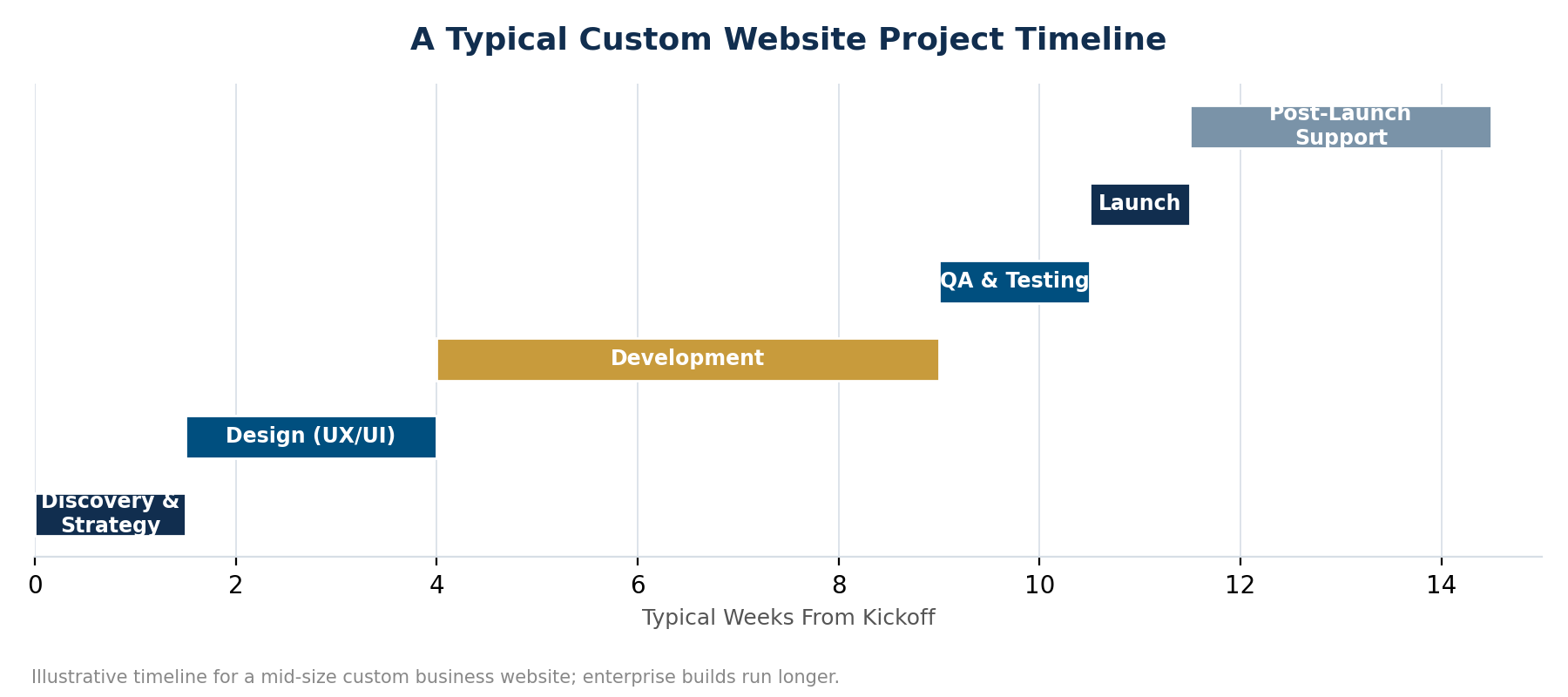
Figure 2: A typical custom website project timeline, discovery through post-launch support.
The biggest timeline risk isn’t development — it’s the discovery and content phases, where waiting on client feedback, copy, or brand assets routinely adds 2–4 weeks to a project that would otherwise move faster.
The Real 3-Year Cost of Ownership (Not Just the Build)
The build price is only part of the story. A $12,000 small business website with modest ongoing support typically costs $23,000–$42,000 across three years once you factor in hosting, security monitoring, content updates, and periodic redesign work. If a vendor’s quote doesn’t mention what happens after launch, ask — because that cost doesn’t disappear, it just gets deferred and often becomes an emergency expense when something breaks.
Why Ultra-Cheap Website Builders Often Cost More Later
A $500 DIY website or a $50/month template builder isn’t wrong for every business — but it comes with trade-offs that are easy to underestimate: limited SEO control, difficulty integrating business systems, and a redesign bill later that’s larger than if you’d built correctly the first time. The businesses that regret the cheap option most are the ones that grew faster than their website could accommodate, and had to rebuild from scratch instead of extending what they had.
The pattern we see most often: a business launches on a $300/year builder, grows for two or three years, and then hits a wall — the platform can’t support the integration, page count, or design change they need. At that point, the choice isn’t “upgrade the template,” it’s “rebuild from zero,” and the total spend across both the cheap site and the eventual rebuild usually exceeds what a properly scoped custom site would have cost from the start. Cheap isn’t the wrong choice for every business — but it should be a deliberate one, made with the growth ceiling in mind, not a default made to avoid a bigger number today.
How to Budget for Your Website Project
- Define what the site needs to do, not just look like, before requesting quotes
- Get itemized quotes that separate design, development, content, and ongoing maintenance
- Ask every vendor what happens after launch — hosting, updates, support SLAs
- Budget 10–15% contingency for scope discovered mid-project
- Confirm who owns the code, the CMS login, and the domain when the project ends
Frequently Asked Questions
How much does a small business website cost in 2026?
Most small businesses spend $2,000–$15,000, with the majority landing in the $5,000–$10,000 range for a custom-designed, multi-page website with basic SEO setup.
Is it worth paying for a custom website instead of a template?
If your website needs to convert visitors into leads or customers, generally yes — custom design and structure give you more control over conversion elements, page speed, and SEO than most templates allow.
What’s included in a typical custom website quote?
A well-scoped quote should include design, development, basic on-page SEO, a content management system, testing across devices, and a defined support window after launch.
Why do website quotes vary so much for what sounds like the same project?
Because “website” isn’t a standard unit — page count, custom functionality, integrations, and post-launch support all vary widely between quotes, even when the page count looks similar on paper.
Should I budget for website maintenance every year?
Yes. Plan for ongoing costs of roughly 15–20% of your build cost annually to cover hosting, security updates, and routine content changes.
Can I start with a basic website and upgrade later?
Yes, and it’s often the right move for a new business — just build on a platform and structure that can be extended rather than replaced, so the upgrade is additive rather than a full rebuild.
MEAN Consultors builds custom business websites and web platforms for U.S. companies — from 10-page marketing sites to full order-management portals.