
Local SEO Checklist 2026: The Complete Guide to Ranking in Your City
Last updated: July 9, 2026 · By Joseph Olivas, Founder, MEAN Consultors · 11 min read
Most “local SEO checklists” are 40 items long and treat every task as equally important — which is exactly backwards, because a handful of factors do most of the ranking work. This guide is ordered by actual impact, based on the latest industry ranking factor research, so you can prioritize correctly with limited time and budget.
What Actually Moves Local Rankings in 2026
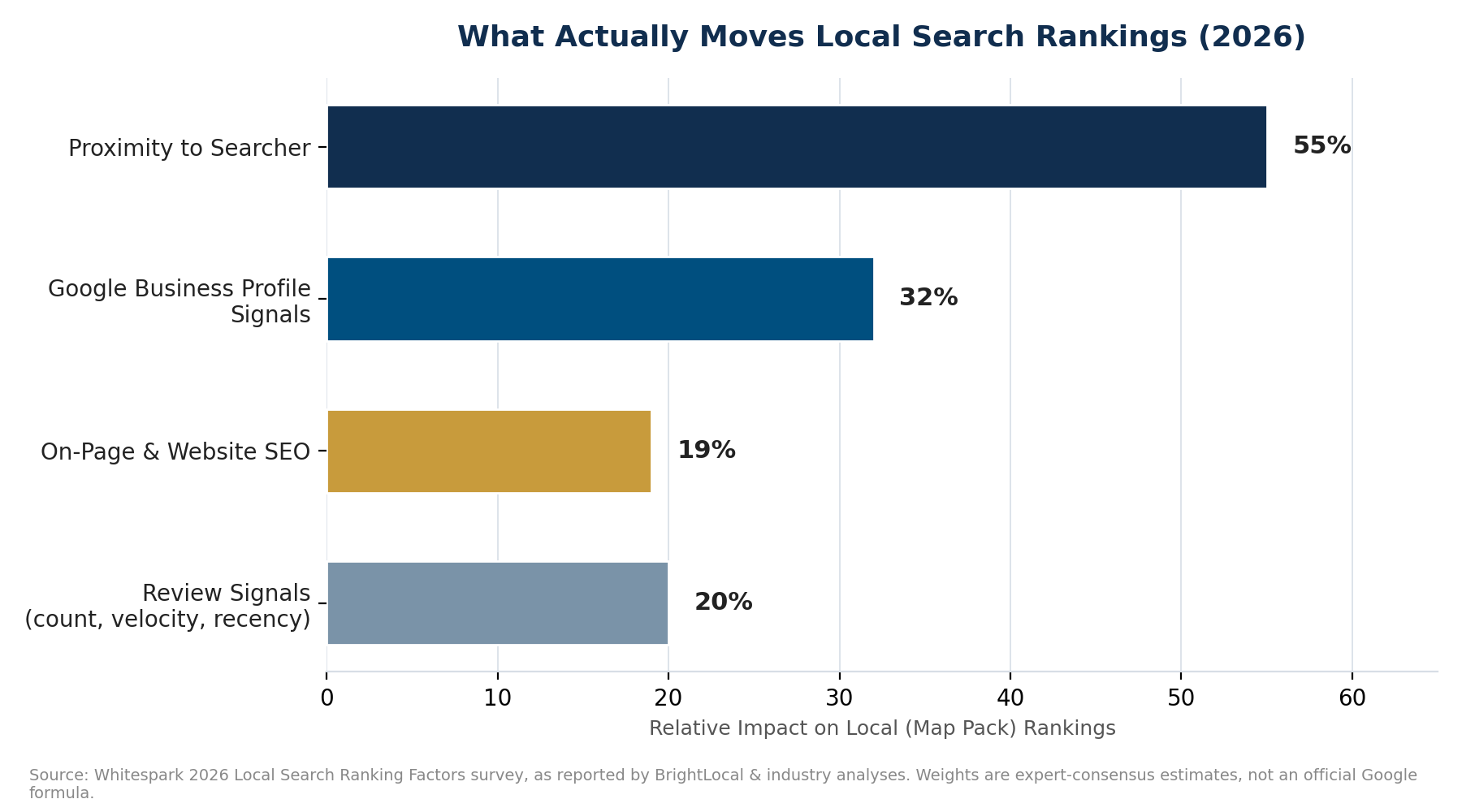
Figure 1: Relative impact of the top local search ranking factors, 2026.
Before diving into tasks, it helps to understand where your effort actually pays off. Proximity to the searcher is the single largest factor and the one you influence least directly — mostly through accurate location data and, for multi-location businesses, dedicated local pages. Everything else on this list is squarely within your control.
- Google Business Profile signals and review signals together account for roughly half of local ranking weight — prioritize these before chasing backlinks.
- Review recency matters as much as review volume: reviews from the last 90 days carry more weight than older ones, regardless of your total count.
- Businesses that respond to 80%+ of their reviews see a measurable ranking benefit — response rate is a ranking factor, not just a courtesy.
1. Google Business Profile: The Highest-Leverage Task on This List
If you do nothing else on this checklist, do this section. Google Business Profile (GBP) signals account for roughly a third of local ranking weight, and most businesses leave most of that value on the table by treating their profile as a “set it and forget it” listing.
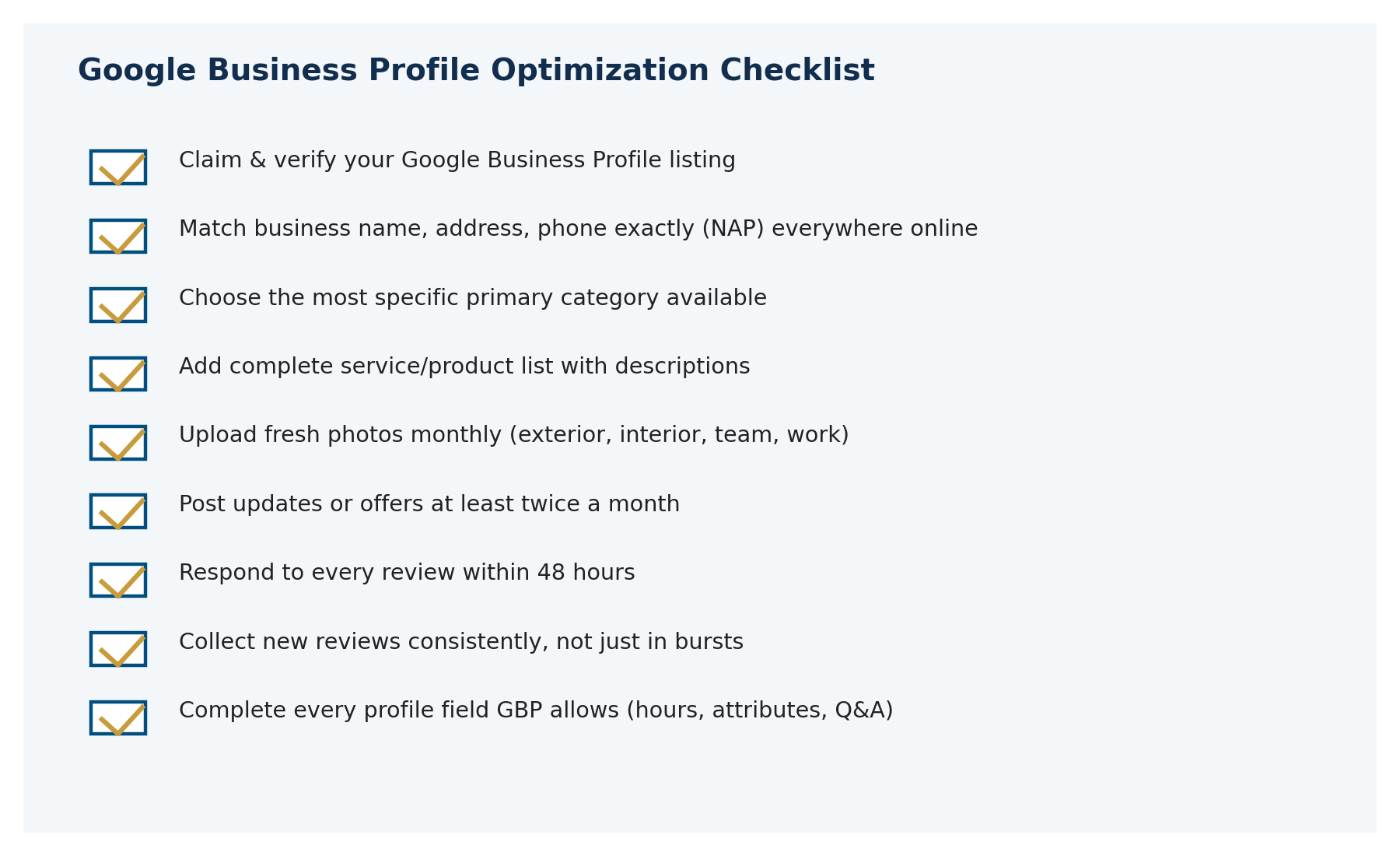
Figure 2: The Google Business Profile optimization checklist.
- Claim and verify your listing if you haven’t already
- Match your business Name, Address, and Phone (NAP) exactly across your website, GBP, and every directory you appear on
- Select the single most specific primary category available — “Web Design Company” beats “Business Consultant” if it’s accurate
- Fill out every available field: services, products, business description, attributes, and Q&A
- Upload new photos monthly — listings with more recent photos get more engagement and, indirectly, better signals
- Post updates or offers at least twice a month using the GBP Posts feature
2. Reviews: Count, Velocity, and Response Rate
Review signals have grown from roughly 16% of local ranking weight in 2023 to closer to 20% today, and that share keeps rising — but the way reviews help isn’t just “get more of them.” Three sub-factors matter:
- Velocity — a steady drip of new reviews outperforms an occasional burst, even at the same total count
- Recency — reviews from the past 90 days carry more weight than older reviews, so a strong review history from two years ago doesn’t help much today
- Response rate — businesses that respond to 80%+ of their reviews see a measurable ranking boost, not just a reputational one
3. On-Page & Website SEO: Where SEO services Still Matter Most
On-page SEO accounts for about 19% of local ranking weight — smaller than GBP or reviews, but still meaningful, and it’s the layer most within a web development team’s direct control. At minimum, your website needs:
- A dedicated page for each service and, if you serve multiple areas, each primary location
- Your city/region and service named naturally in title tags, headers, and body copy — not stuffed, just present
- NAP information visible in the footer of every page, matching your GBP exactly
- LocalBusiness schema markup with your address, hours, and service area
- Fast load times and mobile usability — local searches skew heavily mobile
If your website was built years ago or on a platform that limits your ability to add schema and location pages, that’s usually the first sign it’s time for a web development refresh alongside your SEO work — the two rarely succeed in isolation from each other.
4. Citations and NAP Consistency
Citations (your business listed on directories like Yelp, Apple Maps, and industry-specific directories) matter less than they did five years ago, but inconsistent NAP data across them still actively hurts you. The fix isn’t “get listed everywhere” — it’s auditing the citations you already have and correcting mismatches, especially on the handful of directories that matter most for your industry.
Run this audit in an afternoon: search your exact business name plus city, list every directory that surfaces, and check each one against your current NAP. Prioritize fixing the top 10–15 most-visited directories for your industry rather than chasing every listing site that exists — diminishing returns set in quickly past that point, and your time is better spent on Google Business Profile and reviews.
Multi-Location Businesses: Avoiding Duplicate Content
If you operate in more than one city, resist the temptation to spin up near-identical location pages with the city name swapped. Google recognizes templated duplicate content, and thin location pages can actively suppress rankings rather than help them. Each location page needs unique, genuinely useful content: local team information, location-specific services, and real local proof (reviews, case studies, service-area specifics) — not just a find-and-replace on a template.
A useful test: read two of your location pages side by side and count how many sentences would still be true if you swapped the city names. If the answer is “almost all of them,” the pages are templated duplicates in Google’s eyes even if the words differ slightly. Each page should include something a generic template couldn’t — a specific neighborhood you serve, a local partnership, or project examples from that market.
A Regional Example: Ranking in a Competitive Market
Businesses competing in larger metro areas — Jacksonville, Florida among them — face more competition for the same map pack real estate than a business in a smaller town, which makes prioritization even more important. A business with a thin GBP profile and a dozen reviews is not going to outrank an established competitor with 200 recent reviews and a fully built-out profile through content volume alone. In competitive metros, the fastest path to visible movement is almost always fixing GBP completeness and building a consistent review cadence before investing heavily in additional content or link building.
Common Local SEO Mistakes We See
- Multiple GBP listings for the same location (splits review signals and confuses Google)
- NAP mismatches between the website footer, GBP, and old directory listings
- Ignoring negative reviews instead of responding professionally
- Location pages with under 150 words of unique content
- No schema markup, or schema with outdated address/hours information
How Long Does Local SEO Take to Show Results?
Most businesses see meaningful map pack movement within 60–90 days of fixing Google Business Profile and citation issues, since those signals update relatively quickly. On-page and content-driven improvements typically take 3–6 months to fully mature. If a provider promises top rankings in two weeks, that’s a signal to ask more questions, not a guarantee of quality work.
Frequently Asked Questions
What is the single most important local SEO factor in 2026?
Proximity to the searcher carries the most ranking weight, but since it’s largely outside your control, Google Business Profile optimization is the highest-leverage factor you can actually act on.
How many Google reviews do I need to rank well locally?
There’s no fixed number — a steady, ongoing flow of recent reviews with a high response rate matters more than hitting an arbitrary total count.
Do I need a separate webpage for each service area?
Only if each page has genuinely unique, useful content. Thin, templated location pages can hurt more than they help.
Is local SEO different from regular SEO?
Local SEO adds proximity, Google Business Profile, and review signals on top of standard on-page and technical SEO — it’s an additional layer, not a replacement.
How often should I update my Google Business Profile?
At minimum monthly — new photos and at least one post — since profile activity is itself a signal Google appears to reward.
Can I fix local SEO myself, or do I need an agency?
The Google Business Profile and review portions are very doable in-house with consistency. Technical on-page work, schema markup, and multi-location content strategy typically benefit from professional SEO services.
Does paying for Google Ads improve local organic rankings?
No — paid ads and organic map pack rankings are separate systems. Ad spend can put you in the sponsored section, but it has no direct effect on your organic local ranking.
MEAN Consultors runs local SEO audits and full campaigns for U.S. businesses — Google Business Profile, on-page, and citation work included.