
MVP Development Cost: How to Scope a Minimum Viable Product Budget
Last updated: August 24, 2026 · By Joseph Olivas, Founder, MEAN Consultors · 9 min read
Every founder conversation about an MVP eventually arrives at the same question: “What’s this going to cost me?” And the honest answer is that the number depends less on hourly rates than on decisions made before a single line of code is written. I’ve scoped MVPs that came in under $25,000 and rescued others that burned six figures without shipping. In this guide I’ll break down realistic 2026 cost ranges, where the money actually goes, and the scoping method that keeps a minimum viable product genuinely minimum.
What an MVP Is — and What It Isn’t
The Agile Alliance defines a minimum viable product as the smallest version of a new product that lets a team collect the maximum amount of validated learning about customers with the least effort. Note what that definition centers: learning, not features. An MVP exists to answer one question — will people use and pay for this? — before you commit to the full build.
That framing matters financially because the most common budget killer is treating the MVP as “version one of everything.” CB Insights’ long-running analysis of startup post-mortems found that the top reason startups fail is building something the market doesn’t need. An oversized MVP doesn’t just cost more to build; it delays the moment you find out whether the market wants it at all. The cheapest feature is the one you validate before building.
MVP Cost Ranges in 2026, by Complexity
Rates vary by team model — U.S. agency, offshore team, freelancers, or in-house — but complexity tiers are the more useful lens. These are the ranges we see and quote in practice:
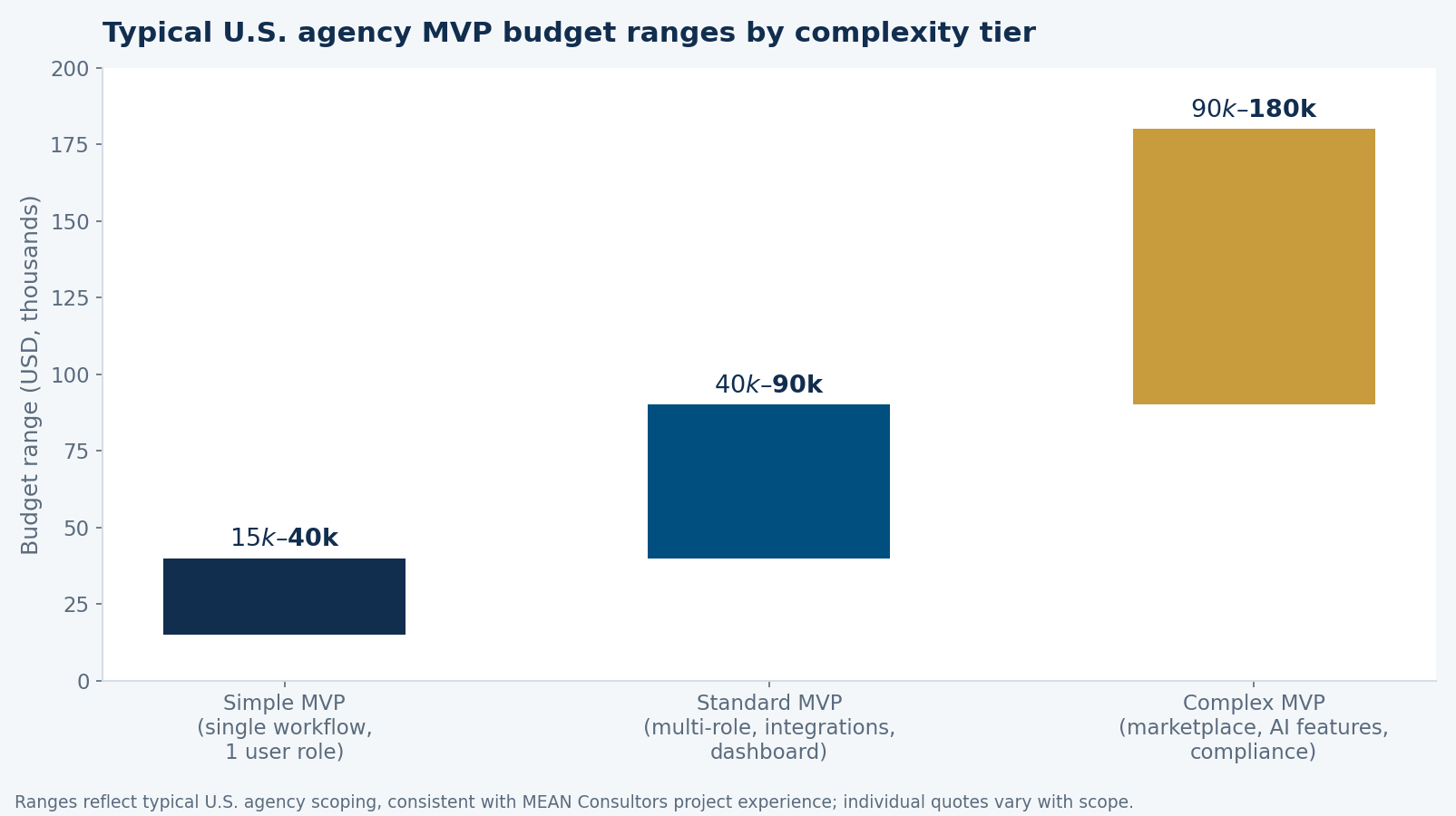
Figure 1: Typical U.S. agency MVP budget ranges by complexity tier, based on MEAN Consultors scoping experience.
| Tier | What it looks like | Typical range | Timeline |
|---|---|---|---|
| Simple MVP | One core workflow, one user role, standard auth, minimal integrations | $15,000–$40,000 | 6–10 weeks |
| Standard MVP | Multiple user roles, 2–4 third-party integrations, dashboard, notifications | $40,000–$90,000 | 10–16 weeks |
| Complex MVP | Marketplace dynamics, AI/ML features, payments at scale, or compliance (HIPAA, SOC 2) | $90,000–$180,000+ | 16–28 weeks |
Two notes on reading that table honestly. First, offshore and nearshore teams can reduce these numbers meaningfully — sometimes by 40–60% — with tradeoffs in communication overhead and rework risk that we’ve covered in our comparison of nearshore vs. offshore development. Second, these are build costs only. Ongoing hosting, maintenance, and iteration typically run 15–25% of the build cost annually — and the whole picture sits inside the broader pricing landscape we mapped in our guide to custom software development costs in 2026.
Where the Money Actually Goes
Founders consistently underestimate everything that isn’t feature development. A healthy MVP budget looks like this:
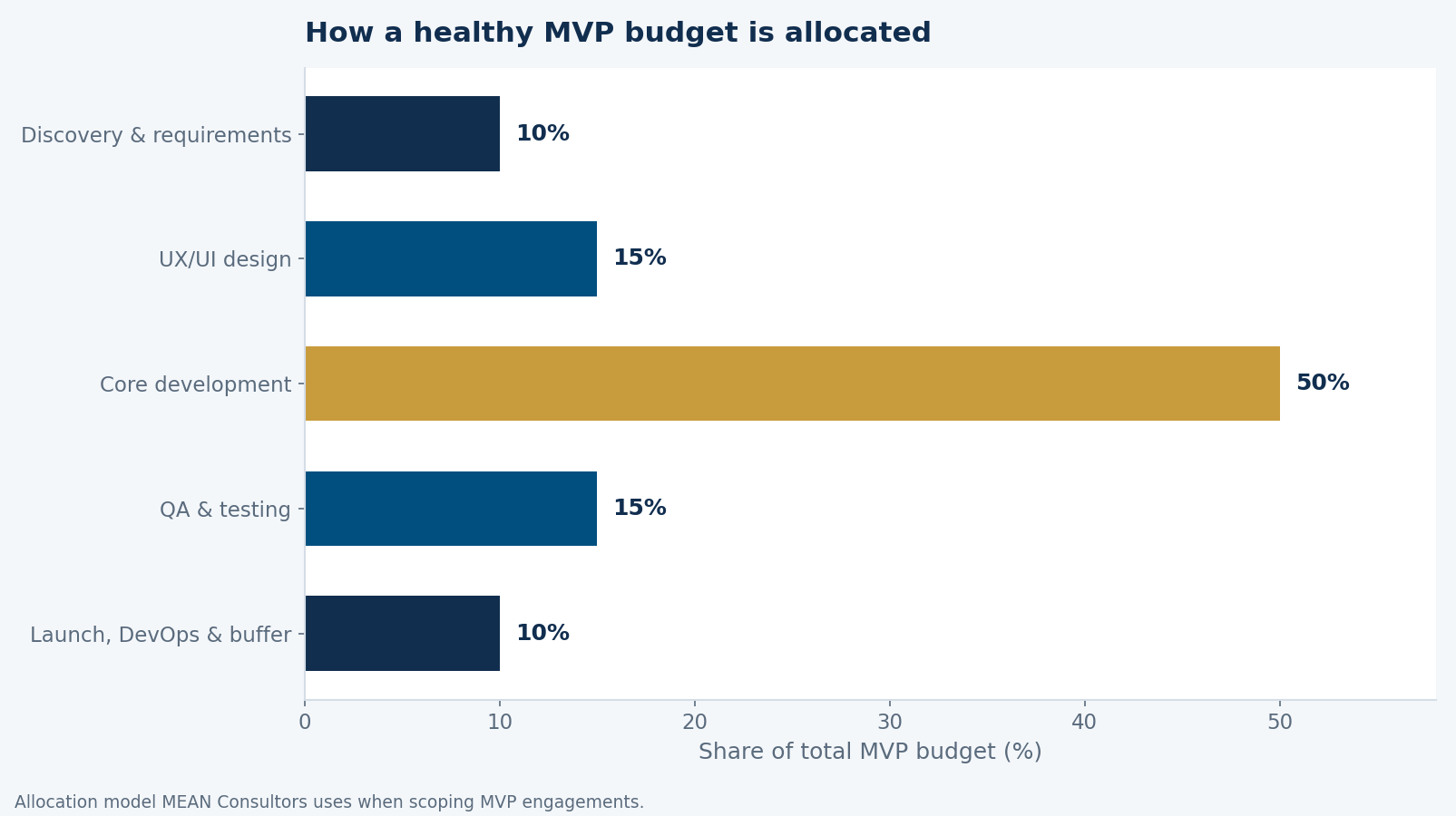
Figure 2: The budget allocation model MEAN Consultors uses when scoping MVP engagements.
Discovery at 10% feels expensive until you skip it. A written requirements document — even a lean one a non-technical founder can produce, like the template in our software requirements guide for founders — is the highest-ROI money in the entire budget, because every ambiguity it removes is a change order you never pay for. QA at 15% is equally non-negotiable: an MVP that crashes during a customer demo doesn’t validate anything except your competitors’ pitch.
- Realistic 2026 MVP ranges: $15k–$40k simple, $40k–$90k standard, $90k–$180k+ complex — driven far more by scope decisions than hourly rates.
- Allocate the budget 10/15/50/15/10 across discovery, design, development, QA, and launch — skipping discovery or QA reliably costs more than it saves.
- An MVP’s job is validated learning; every feature that doesn’t test your core hypothesis belongs in version two.
How to Scope the Budget: A 5-Step Method
Here’s the process we walk clients through before quoting a number:
- Write the hypothesis first: “We believe [customer] will pay for [solution] because [problem].” Every scoped feature must serve testing it.
- Map the one critical user journey end-to-end — signup to core value to payment. That journey is the MVP; everything else is a nice-to-have.
- Sort every requested feature into Must / Should / Later. Be brutal: a typical first draft carries 40–60% “Later” features disguised as “Must.”
- Choose boring technology. Proven stacks and off-the-shelf services for auth, payments, and email are cheaper to build and hire for than novel architecture.
- Reserve a 10–15% contingency. Something will surprise you; the only question is whether the budget already absorbs it.
One more budgeting lens worth applying: expected return. An MVP is an investment with a testable payoff, and modeling even rough revenue scenarios changes scoping conversations dramatically — a $60,000 build that needs 40 customers to break even reads very differently than one that needs 4,000. We published the model we use for this in calculating ROI on a custom software investment.
How Team Model Changes the Number
The same scope priced across different team models produces very different invoices, and it’s worth understanding why before comparing quotes. A U.S. agency bundles project management, design, development, and QA into one accountable team — you pay a premium for coordination you don’t have to do yourself. Freelancer teams strip that premium out, but the project management burden lands on you, and on a first software project that burden is heavier than most founders expect: writing tickets, arbitrating technical disagreements, catching quality issues before they compound. Offshore and nearshore firms sit in between, trading rate savings against time-zone overlap and communication bandwidth.
The comparison founders should actually run isn’t rate-versus-rate — it’s total-cost-to-validated-product. A $75/hour team that needs 30% more hours, two rounds of rework, and three extra months isn’t cheaper than a $150/hour team that ships on schedule; it just invoices differently. When we’re asked to review stalled MVP projects, the root cause is almost never the rate that was paid. It’s a missing requirements document, an absent QA process, or a scope that grew unmanaged — all failures of process, which is precisely what the cheapest option usually doesn’t include.
A practical rule of thumb: if you have a technical co-founder or an experienced product manager in-house, freelancers and offshore teams become much safer bets, because the process gap is covered. If you don’t, buy the process — from an agency or a senior fractional lead — before you buy the hours. It’s the difference between an MVP budget and an MVP lottery ticket.
Frequently Asked Questions
How much does it cost to build an MVP in 2026?
Most MVPs built by U.S. agencies land between $15,000 and $90,000, with simple single-workflow products at the low end and multi-role products with integrations at the high end. Complex MVPs involving marketplaces, AI features, or regulatory compliance commonly run $90,000–$180,000 or more. Offshore teams can lower these figures at the cost of added communication and quality-management overhead.
How long does MVP development take?
Six to ten weeks for a simple MVP, ten to sixteen for a standard one, and four to seven months for complex builds. Discovery and design add two to four weeks up front. Timelines stretch most often from mid-project scope additions — which is a budget problem wearing a schedule costume.
Can I build an MVP for under $10,000?
Sometimes — if you use no-code tools, a very tight single workflow, or a landing-page-plus-concierge approach where you manually deliver the service behind the scenes. These are legitimate validation strategies and often the right first step. What you can’t usually get under $10,000 is custom-coded software with real auth, data handling, and QA.
What’s the biggest driver of MVP cost?
Scope. Rates matter, but the delta between a disciplined 6-week scope and a bloated 20-week scope dwarfs any difference in hourly pricing. The second biggest driver is integrations — each third-party system (payments, CRM, EHR, shipping) adds design, development, and testing effort that founders routinely underestimate.
Should I hire an agency, freelancers, or build in-house for an MVP?
For most non-technical founders, an agency or an experienced small team is the fastest path to a shippable MVP, because you’re buying process and accountability, not just code. Freelancers cost less but push project-management risk onto you. Hiring in-house rarely makes sense pre-validation — you’d be signing long-term payroll to test a short-term hypothesis.
MEAN Consultors scopes and builds MVPs with disciplined budgets, written requirements, and timelines you can plan a launch around.