
SEO Competitor Analysis: A Step-by-Step Framework
Last updated: August 24, 2026 · By Joseph Olivas, Founder, MEAN Consultors · 9 min read
Most businesses think they know their competitors — the shops across town, the vendors who show up at the same trade shows. But in search, your competitors are whoever occupies the results page for the keywords that drive your revenue, and those are often companies you have never heard of, plus directories, aggregators, and publishers. A structured competitor analysis replaces “we should do more SEO” with a specific list: these keywords, these content gaps, these link opportunities, in this order. Here is the exact framework we run for clients of our SEO service at MEAN Consultors.
What an SEO Competitor Analysis Actually Tells You
The goal is not espionage; it is calibration. Google’s own SEO Starter Guide is clear that ranking comes from being the most helpful, relevant result — and the fastest way to understand what “most helpful” looks like for a given query is to study who currently wins it. A proper analysis answers four questions: which keywords produce revenue in your market, why the current winners rank (content, authority, or both), where the exploitable gaps are, and what it will realistically take to close them. That last one matters — some gaps are cheap to close and some are multi-year projects, and treating them the same wastes budget.
The 6-Step Framework
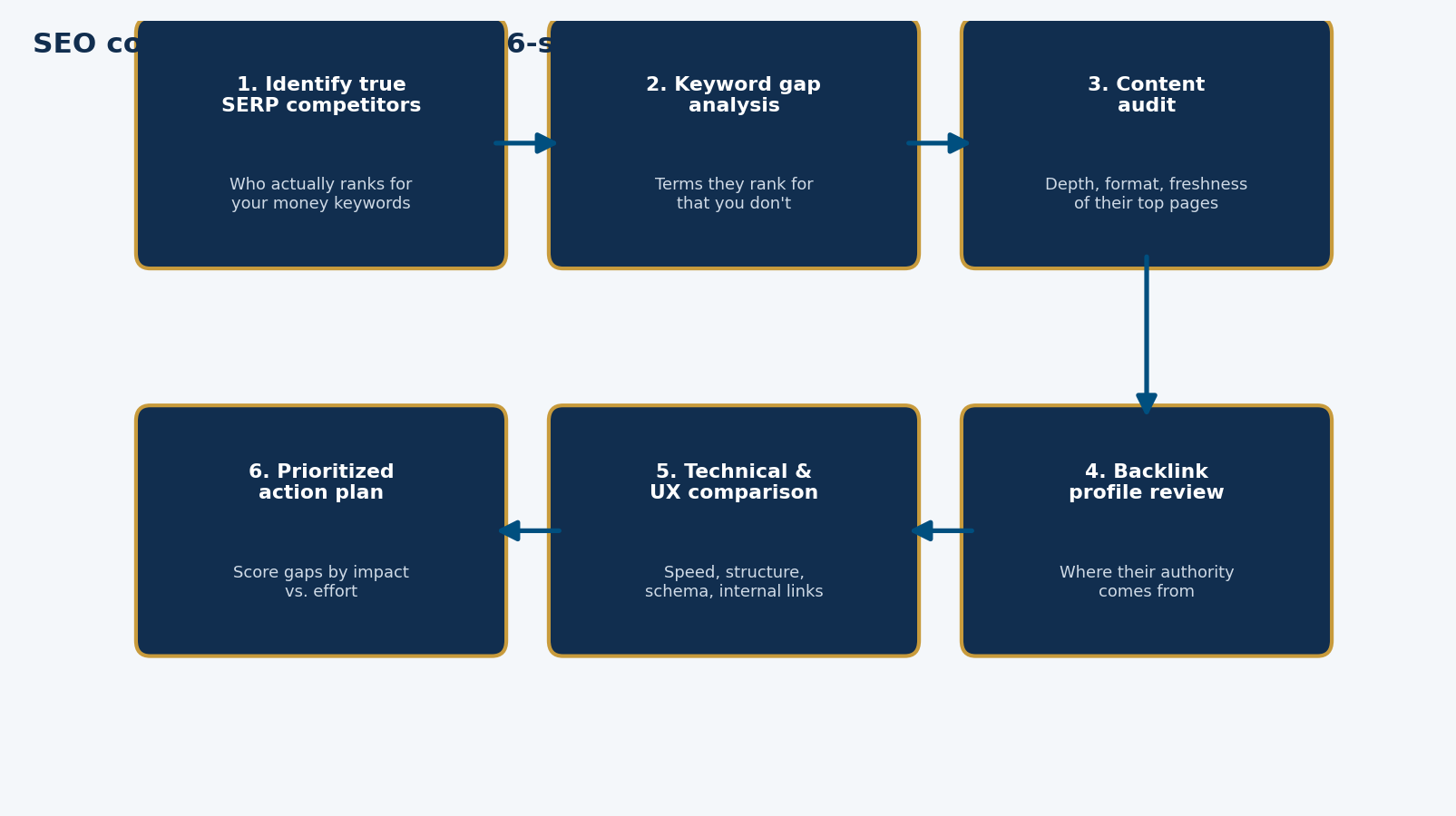
Figure 1: The six-step SEO competitor analysis framework MEAN Consultors runs quarterly for clients.
Step 1: Identify your true SERP competitors
Take your 10–20 most commercially important keywords and search them. Log every domain appearing in the top ten. The domains that appear repeatedly are your real search competitors. Expect surprises: a Jacksonville HVAC company’s competitor set usually includes Yelp, Angi, and a national franchise’s location pages, not just local rivals. Separate direct competitors (businesses like yours) from SERP occupants (directories, publishers) — you outrank the first group with a better version of the same play, and the second group by winning result types they can’t, like the map pack or a genuinely specific service page.
Step 2: Run a keyword gap analysis
A keyword gap is a term your competitor ranks for that you don’t — or where they sit on page one and you sit on page three. Tools like Semrush, Ahrefs, or even the free tier of most platforms can produce this list; we compared the options in our guide to free vs. paid SEO tools. Filter the raw list hard: keep terms with commercial relevance and realistic difficulty, discard vanity keywords. The output should be 20–50 target terms, not 2,000.
Step 3: Audit their top-performing content
For each priority keyword, dissect the pages that outrank you: word count and depth, format (guide, comparison, calculator, video), freshness, original data, and how well they actually answer the query. You are looking for the pattern Google is rewarding in that SERP — and the weaknesses. Thin content ranking on domain authority alone is an invitation: a genuinely better page from you can take that spot.
Step 4: Review their backlink profile
Authority still decides close contests. Pull each competitor’s referring domains and look for replicable links: local press, industry associations, supplier directories, guest contributions, resource pages. Skip the links you can’t replicate and the ones you shouldn’t want — we wrote a full guide on evaluating backlink quality before chasing any link. The deliverable from this step is a short list of link targets with a realistic acquisition path for each.
Step 5: Compare technical health and UX
Run your site and your top two competitors through PageSpeed Insights and a crawler. Compare Core Web Vitals, mobile experience, site architecture, schema markup, and internal linking. Technical parity is table stakes; technical advantage is a tiebreaker. If a competitor’s site is slow and yours is fast, every content improvement you ship works harder.
Step 6: Build the prioritized action plan
Convert every gap into a task and score it. We weight five factors when scoring, and the weighting matters — chasing backlink parity first is usually slower and more expensive than closing keyword and content gaps:
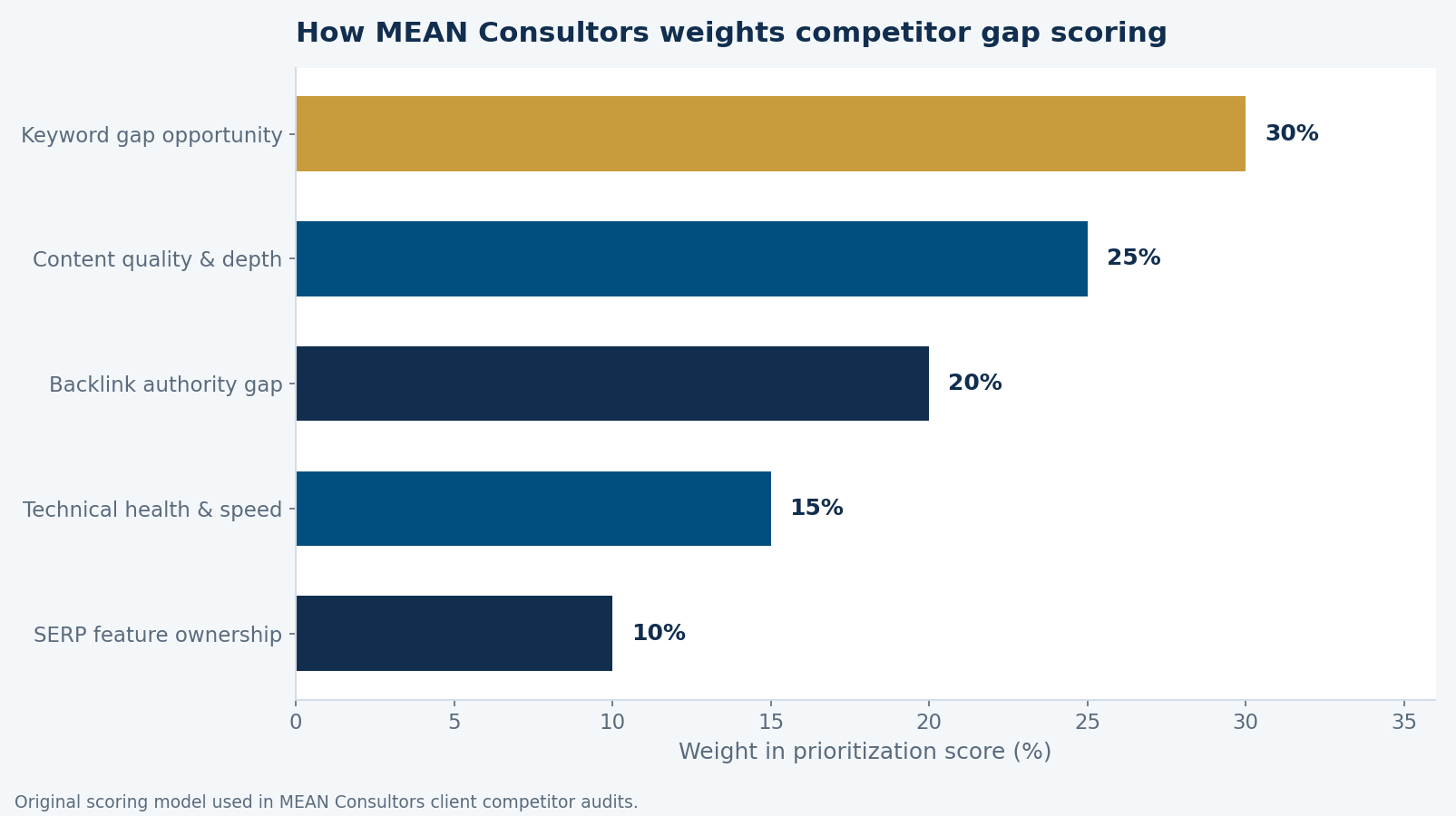
Figure 2: The weighting model MEAN Consultors uses to prioritize competitor gaps — an original scoring framework from our client audits.
Turning Gaps Into a Quarterly Plan
Here is how the scored output typically shapes a quarter for a small business client:
| Gap type | Typical fix | Time to impact |
|---|---|---|
| Keyword gap, low difficulty | New page or post targeting the term | 4–12 weeks |
| Content quality gap | Rewrite/expand existing page, add original data | 4–8 weeks |
| Backlink authority gap | Replicable link outreach, digital PR | 3–9 months |
| Technical gap | Speed, schema, internal linking fixes | 2–6 weeks |
| SERP feature gap | FAQ schema, map pack optimization, images | 2–8 weeks |
- Your search competitors are whoever ranks for your money keywords — often directories and out-of-market companies, not the rivals you know.
- The framework runs in six steps: identify SERP competitors, keyword gap analysis, content audit, backlink review, technical comparison, and a scored action plan.
- Weight keyword and content gaps above backlink gaps when prioritizing — they close faster and compound, while authority-building runs in the background.
Five Mistakes That Sink Competitor Analyses
After running these for years, the failure modes are predictable:
- Analyzing business competitors instead of SERP competitors — the companies you fear are often irrelevant in search.
- Collecting data without scoring it — a 40-tab spreadsheet nobody acts on is not a strategy.
- Copying competitors instead of beating them — matching their content earns you second place at best.
- Chasing every keyword gap — most gaps are noise; revenue relevance and realistic difficulty are the filters.
- Treating it as one-and-done — a single snapshot decays fast; the value is in the quarterly trend.
The thread connecting all five: analysis is only worth what it changes about next quarter’s work. The framework’s entire purpose is to end with a short, scored list your team actually executes.
Frequently Asked Questions
What is an SEO competitor analysis?
An SEO competitor analysis is a structured review of the websites that outrank you for your target keywords. It examines their keywords, content, backlinks, and technical setup to identify specific, prioritized opportunities — keyword gaps to fill, content to improve, and links to pursue — so your SEO budget goes where it moves rankings.
How do I find my SEO competitors?
Search your 10–20 most commercially important keywords and log every domain in the top ten results. Domains that appear repeatedly are your true SERP competitors. They usually include directories and out-of-market companies alongside your known business rivals, and each type requires a different strategy to displace.
What tools do I need for competitor analysis?
You can start with free tools: Google Search itself, Google Search Console, and PageSpeed Insights. Paid platforms like Semrush or Ahrefs make keyword gap and backlink analysis dramatically faster and are worth it once SEO is a real channel for you. The framework matters more than the toolset — expensive tools running an unfocused process still produce noise.
How often should I run an SEO competitor analysis?
Quarterly for most businesses. That cadence catches SERP shifts, new competitor content, and algorithm updates without consuming your team. Re-run it immediately if you see a sudden ranking drop, a new competitor entering your top SERPs, or after a confirmed Google core update reshuffles your results.
How long does a competitor analysis take?
A focused analysis of three to five competitors takes roughly 8–15 hours the first time: one to two hours for competitor identification, two to four for the keyword gap, and the remainder split across content, backlink, and technical review. Quarterly refreshes are faster — typically half a day — because you are updating a baseline rather than building one.
MEAN Consultors runs full competitor analyses and turns them into prioritized SEO roadmaps that move rankings and revenue.