
Vertical SaaS vs. Custom Software for Niche Industries: How to Choose
Last updated: July 20, 2026 · By Joseph Olivas, Founder, MEAN Consultors · 8 min read
If you run a specialty medical practice, a regional logistics firm, or a niche manufacturing shop, you have probably felt the tension: the big horizontal platforms are too generic, the spreadsheets have stopped scaling, and you are weighing whether to subscribe to an industry-specific product or commission something built just for you. This is the vertical SaaS versus custom software decision, and getting it wrong is expensive in either direction. Below I break down what each approach actually delivers, the data behind the trade-offs, and the framework I use with clients at MEAN Consultors.
Vertical SaaS vs. custom software: the short version
Vertical SaaS is off-the-shelf software purpose-built for a single industry — think dental practice management, restaurant point-of-sale, or field-service dispatching. It is not the generic, one-size-fits-all tooling that horizontal SaaS (like a general CRM or accounting suite) offers. That focus is exactly why the category is booming. The vertical SaaS market is projected to grow from roughly $143 billion in 2026 to nearly $500 billion by 2035, a 16.3% compound annual growth rate, and it now accounts for about 35% of all SaaS spending. When you evaluate a niche product, you are choosing from a maturing, well-funded market — not betting on a one-off vendor.
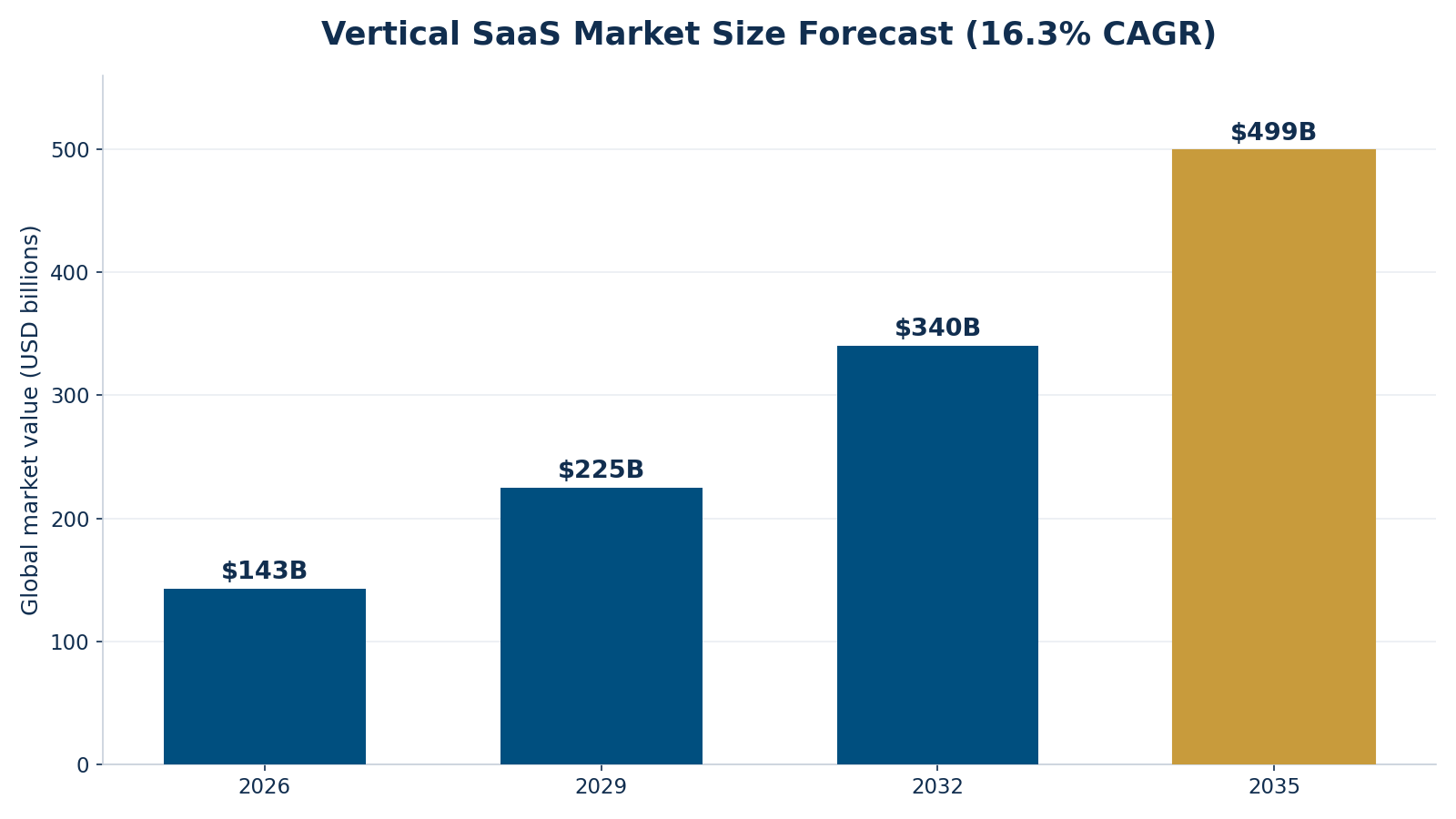
Figure 1: The vertical SaaS market is on track to more than triple by 2035, reflecting how much industry-specific software has matured.
Custom software, by contrast, is a system designed and coded around your exact process. It costs more upfront and takes longer to launch, but it fits like a tailored suit and you own it. The honest comparison looks like this:
| Dimension | Vertical SaaS | Custom-Built Software |
|---|---|---|
| Time to launch | Days to weeks | Months |
| Upfront cost | Low (subscription) | High (project investment) |
| Fit to your workflow | Good for standard processes | Exact |
| Data & IP ownership | Vendor-hosted | You own it |
| Ongoing cost | Recurring per-seat fees | Maintenance only |
| Best when… | The product covers ~80%+ of your needs | Your process is a differentiator |
- Vertical SaaS reduces implementation cost by an estimated 40–60% versus adapting generic tools, because the industry logic is already built in.
- Niche solutions see roughly 35% higher user adoption than horizontal alternatives — staff resist software that does not speak their language.
- Custom software’s advantage is not features; it is ownership, exact fit, and freedom from per-seat pricing as you scale.
What vertical SaaS does well
For most niche businesses, a good vertical product is the pragmatic first move. It is live in days, the vendor absorbs security patches and compliance updates, and the workflows already reflect how your industry operates — so training is faster and adoption is higher. That last point matters more than people expect: the fastest way to waste a software budget is to buy something your team quietly refuses to use. Because the vendor spreads development costs across thousands of similar customers, you also get a feature roadmap you could never justify funding alone. If you are still deciding between building and subscribing at all, our guide on the build vs. buy software framework walks through the math in more detail.
The catch is that you adapt to the software, not the other way around. Configuration options have limits, your data lives on the vendor’s servers, and per-seat pricing quietly compounds as you grow. For a business whose processes are fairly standard for its industry, those are acceptable trade-offs. For one whose edge is a non-standard process, they are dealbreakers.
Where custom-built systems pull ahead
Custom development earns its higher price tag in a specific set of situations. When we scope custom software development projects, the strongest candidates almost always share these traits:
- Your core workflow is a competitive advantage that off-the-shelf products would flatten into sameness.
- You are stitching together three or more disconnected tools with manual re-keying between them.
- Per-seat SaaS fees have grown into a five- or six-figure annual line item as your headcount climbed.
- You need to own your data, your integrations, and your intellectual property outright — not rent them.
- No vertical product fits without costly customization, middleware, or workarounds that recreate custom-development cost anyway.
To make the trade-offs concrete, here is the decision-fit scorecard I use with clients — scoring each approach zero to ten on the dimensions that most often drive the choice:
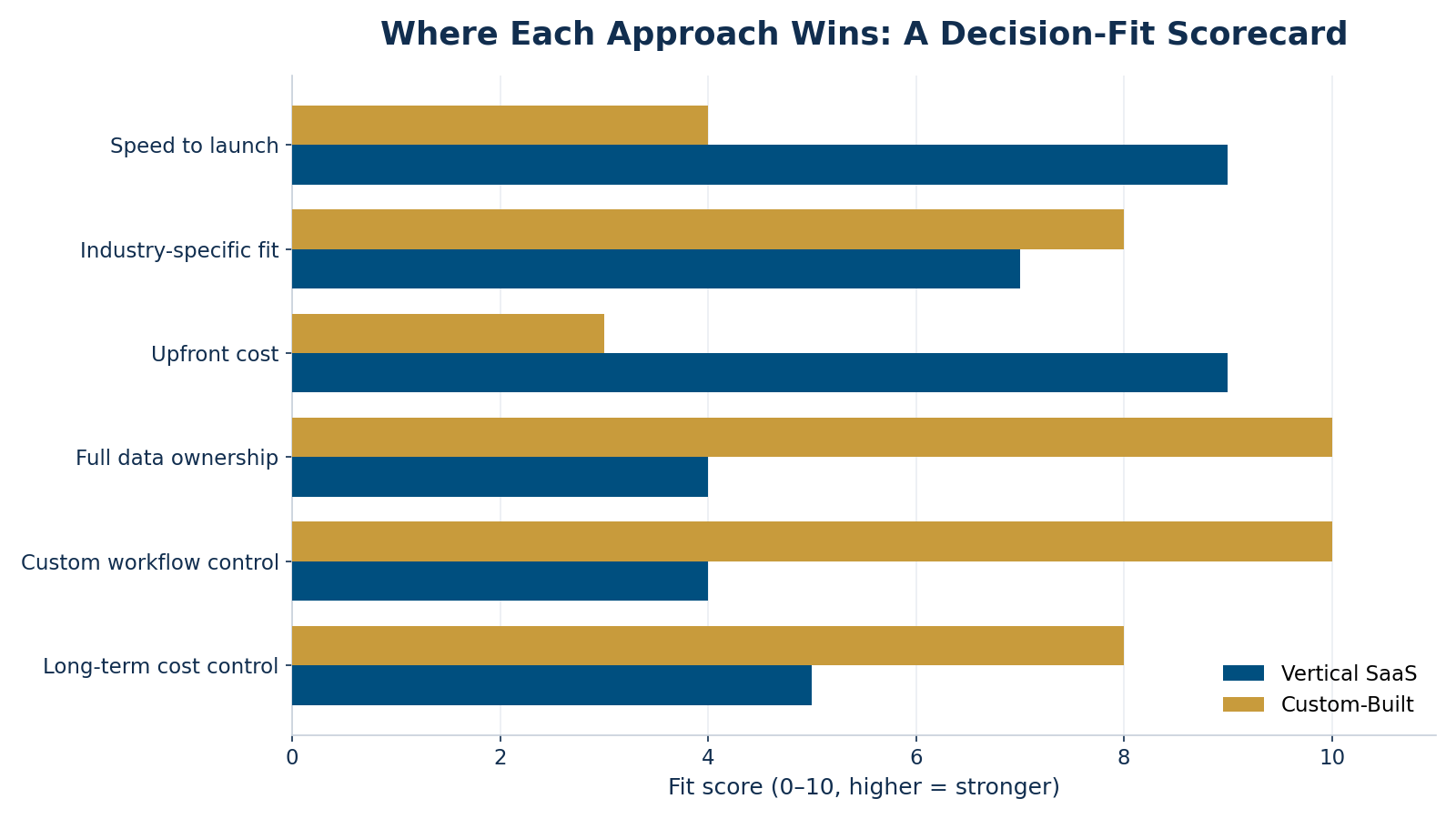
Figure 2: A decision-fit scorecard — vertical SaaS wins on speed and upfront cost; custom-built wins on ownership, control, and long-term economics.
How to decide for your business
Start by writing down your actual workflow, step by step, before you look at any product demo. Then test candidate vertical products against that map and mark where each one forces a compromise. Score the compromises: cosmetic annoyances are fine, but a gap in a revenue-critical step is a red flag. If two or more vertical products clear the 80% bar, subscribe to the better-supported one and revisit in a year. If none do — or if the gaps cluster around the process that differentiates you — that is your signal to scope a custom build. Many of our clients land on a hybrid: vertical SaaS for commodity functions like accounting and payroll, custom software for the one or two workflows that are genuinely theirs.
Frequently Asked Questions
What is the difference between vertical SaaS and horizontal SaaS?
Vertical SaaS is built for one industry — for example, software made specifically for dental practices or trucking companies. Horizontal SaaS serves any industry with a general-purpose tool, like a generic CRM or accounting app. Vertical products fit niche workflows better out of the box; horizontal products are more flexible but require more configuration.
Is custom software always more expensive than vertical SaaS?
Upfront, almost always — custom is a project investment while SaaS is a subscription. Over three to five years, however, custom can be cheaper once per-seat SaaS fees, add-on modules, and integration costs are counted, especially for larger teams. We break the full math down in our total cost of ownership comparison.
Can I start with vertical SaaS and switch to custom later?
Yes, and that is often the smartest path. Start with a vertical product to get running quickly, and commission custom software once a specific, revenue-critical process clearly outgrows what the market offers. Plan for clean data export from day one so the migration is painless.
How do I know if a vertical SaaS product fits my business?
Map your real workflow first, then test each product against it and note where it forces a compromise. If a product covers at least 80% of your process without workarounds — and the missing 20% is not a core differentiator — it is a strong fit.
What is a hybrid approach?
A hybrid uses vertical or horizontal SaaS for commodity functions (accounting, payroll, email) and custom software for the one or two workflows that set you apart. It captures the speed and low cost of SaaS while protecting the processes that actually drive your revenue.
MEAN Consultors helps niche businesses map their workflows and choose between vertical SaaS and custom-built software — with no pressure to over-build.