
MEAN Stack vs. MERN Stack for Business Websites: What Actually Matters
Last updated: July 22, 2026 · By Joseph Olivas, Founder, MEAN Consultors · 8 min read
Whenever a client asks me “which stack should we build on?” the conversation almost always drifts toward two acronyms: MEAN and MERN. They sound like competing products, but they’re really the same idea with one component swapped out. In this guide I’ll explain what each stack actually is, where the differences genuinely matter for a business, and how I help clients pick one during early scoping — without the hype.
What the MEAN and MERN stacks actually are
A “stack” is just the bundle of technologies that run your application from the database up to the screen. Both MEAN and MERN share three of their four layers. M is MongoDB, a document database that stores data as flexible JSON-like records. E is Express, a lightweight framework that runs on the server and handles requests. N is Node.js, the runtime that lets JavaScript run on the server instead of only in the browser. The last letter is the front-end framework that builds what your visitors see and click: A for Angular in MEAN, R for React in MERN.
The headline feature of both stacks is that they are written end to end in a single language — JavaScript — from the database queries all the way to the buttons on the page. That’s a real advantage for hiring, code reuse, and maintenance, and it’s a big reason these stacks power so many modern web applications. If you want the broader context on how a stack fits into a full build, our web development services page walks through the process we follow from architecture to launch.

Figure 1: React is used by far more developers than Angular, which affects hiring and cost for MERN vs. MEAN projects.
The only real difference: Angular vs. React
Because MongoDB, Express, and Node.js are shared, the entire MEAN-vs-MERN decision comes down to the front end. This is where the practical trade-offs live.
Angular (MEAN) is a full, opinionated framework maintained by Google. It ships with almost everything a large application needs — routing, forms, HTTP handling, and a strict structure — built in. That structure is a gift for big teams building complex, long-lived enterprise software because it enforces consistency. The cost is a steeper learning curve and more boilerplate.
React (MERN) is a lighter library maintained by Meta. It handles the user interface and lets you choose the rest of your tools. That flexibility makes it faster to start with, easier to hire for, and extremely popular for customer-facing websites and startups that need to move quickly. The trade-off is that your team makes more architectural decisions themselves.
According to the Stack Overflow Developer Survey 2024, roughly 40% of professional developers report using React, compared to about 17% for Angular. That gap isn’t a quality verdict — both are excellent — but it directly affects how easily you’ll find developers and how much they’ll cost.
| Factor | MEAN (Angular) | MERN (React) |
|---|---|---|
| Front-end type | Full framework | UI library |
| Learning curve | Steeper | Gentler |
| Best fit | Large enterprise apps | Customer-facing sites, MVPs |
| Developer availability | Smaller talent pool | Very large talent pool |
| Structure | Opinionated, consistent | Flexible, your choice |
- MEAN and MERN share three of four layers — MongoDB, Express, and Node.js are identical in both.
- React (MERN) is used by roughly 40% of developers vs. about 17% for Angular (MEAN), making MERN talent easier and often cheaper to hire.
- Angular’s built-in structure favors large enterprise apps; React’s flexibility favors fast, customer-facing builds.
Why this choice matters for your business (not just your developers)
It’s tempting to treat the stack as a purely technical decision to hand off. It isn’t. The stack shapes three things you’ll feel directly as an owner: how fast you can launch, how much ongoing development costs, and how easily you can replace or add developers a year from now.
Because JavaScript runs on both the server and the browser in these stacks, a single developer can often work across the whole application. That reduces handoffs and, in my experience, shortens timelines. When you eventually need to hire, the size of the talent pool becomes a budget question — a stack with more available developers usually means faster hiring and more competitive rates. This is the same logic that drives the build decisions we cover in WordPress vs. Custom-Coded Website, where the platform choice quietly determines cost and speed for years.
The other business factor is longevity. Angular’s rigid structure means a new developer joining an enterprise MEAN project will find familiar patterns and get productive faster. React’s freedom is wonderful for speed but can produce inconsistent codebases if the original team didn’t set clear conventions — which is why good documentation and standards matter more on MERN projects.
How to choose the right stack
Here’s the decision path I actually use with clients. It takes about ten minutes and cuts through most of the debate.
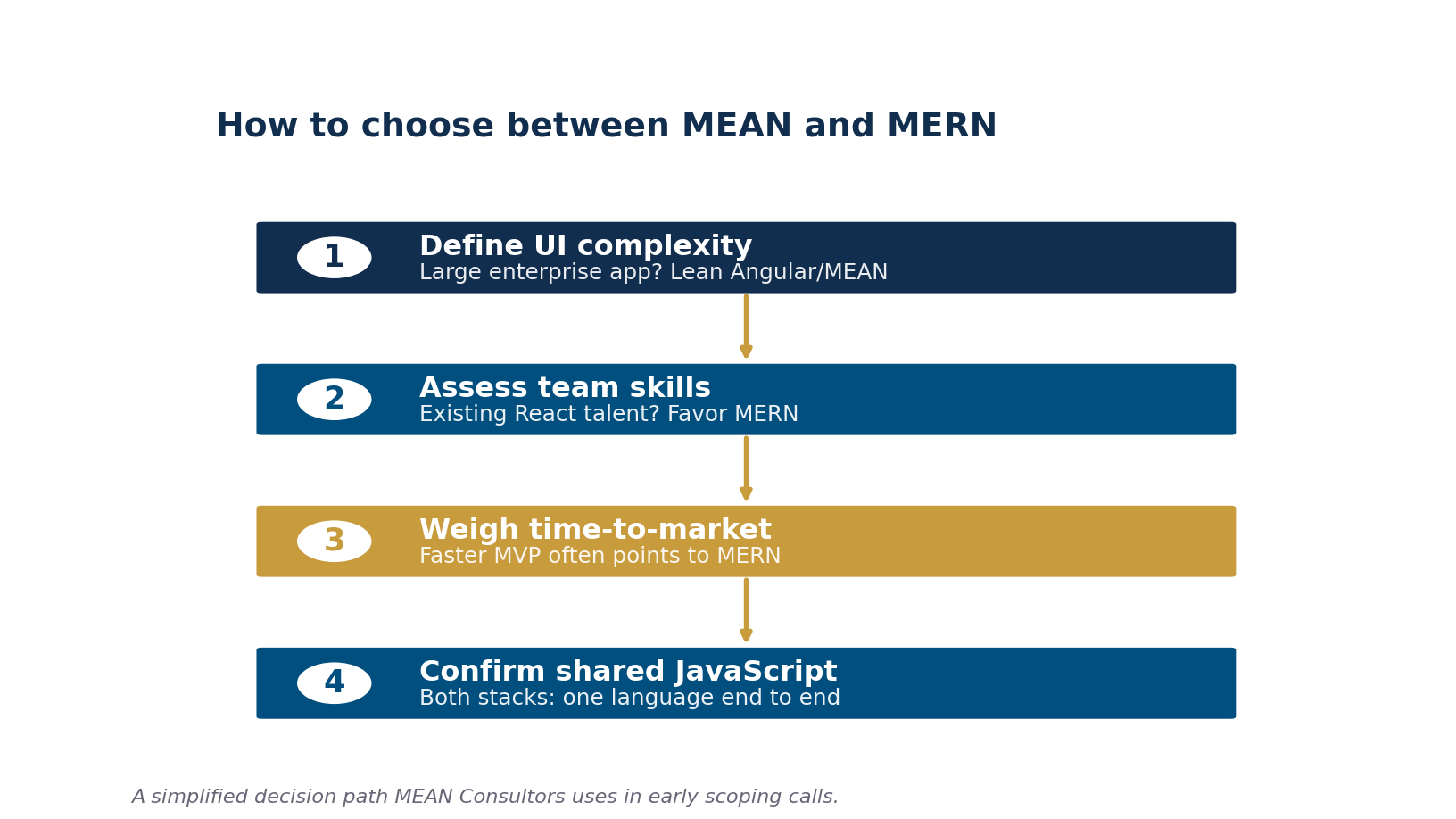
Figure 2: A simplified decision path MEAN Consultors uses in early scoping calls.
- Gauge UI complexity. A large, form-heavy internal enterprise tool leans toward Angular/MEAN. A marketing site or interactive product experience leans toward React/MERN.
- Check your existing team. If you already employ React developers, fighting that to adopt Angular rarely pays off — and vice versa.
- Weigh time-to-market. Need an MVP in front of customers fast? MERN’s lighter footprint usually gets you there sooner.
- Confirm the shared foundation. Either way you get one language end to end, so the database and server work carry over if you ever switch front ends.
What about performance and scalability?
Owners often assume one stack must be faster or scale better than the other. In reality, because MEAN and MERN share MongoDB, Express, and Node.js, their back-end performance and scalability characteristics are effectively the same. Node.js handles many simultaneous connections efficiently thanks to its non-blocking, event-driven design, and MongoDB scales horizontally as your data grows — regardless of whether Angular or React sits on top.
Where you can feel a difference is on the front end, and even there it’s about how the code is written, not which framework you chose. Both Angular and React can produce fast, smooth interfaces or slow, bloated ones depending on discipline around bundle size, lazy loading, and rendering strategy. In other words, the stack sets your ceiling for performance, but your engineering practices determine where you actually land. This is why I tell clients not to over-index on the MEAN-vs-MERN choice for performance reasons; the real gains come from thoughtful architecture, caching, and keeping the front-end lean.
Three myths worth clearing up
A few misconceptions come up in almost every stack conversation, so let’s retire them. The first myth is that MEAN is “enterprise” and MERN is “for startups.” Plenty of large companies run React in production and plenty of nimble teams use Angular; the fit depends on your app and team, not your company size. The second myth is that you must pick perfectly or you’re stuck forever. As noted, the shared back end means switching front ends later is a real but contained project, not a rebuild from zero. The third myth is that the stack determines your project’s success. It doesn’t. Clear requirements, good communication, and a disciplined team matter far more than whether the fourth letter is an A or an R. Choose sensibly, then put your energy into building well.
Frequently Asked Questions
Is MERN better than MEAN?
Neither is universally better. MERN (with React) is more popular and easier to hire for, which suits most customer-facing business websites and startups. MEAN (with Angular) offers more built-in structure that benefits large, complex enterprise applications. The right choice depends on your project’s complexity, your team’s existing skills, and your timeline.
What is the main difference between the MEAN and MERN stack?
The only difference is the front-end technology. MEAN uses Angular, a full framework by Google, while MERN uses React, a lighter UI library by Meta. Both stacks share the same MongoDB database, Express server framework, and Node.js runtime.
Do I need to know JavaScript to use MEAN or MERN?
Your development team does, but you as the business owner do not. The appeal of both stacks for owners is that a single language runs the entire application, which simplifies hiring and maintenance. You only need to understand the trade-offs well enough to make an informed platform decision.
Which stack is cheaper to build with?
MERN projects are often slightly cheaper to staff because React developers are more abundant, which increases competition and availability. That said, the largest cost driver is your application’s complexity and scope, not the stack itself. A well-scoped MEAN project can be just as economical as a MERN one.
Can I switch from one stack to the other later?
Partially. Because MongoDB, Express, and Node.js are shared, your database and server-side code carry over. You would primarily rebuild the front end, replacing Angular with React or the reverse. That’s a meaningful project but far less disruptive than changing your entire technology base.
MEAN Consultors scopes the right architecture for your web build before a line of code is written — so you launch on the stack that fits your team and budget.