
How to Write Meta Titles and Descriptions That Actually Get Clicks
Last updated: July 31, 2026 · By Joseph Olivas, Founder, MEAN Consultors · 8 min read
Your meta title and description are the free ad you show in Google’s search results. Ranking on page one is only half the battle; if the snippet next to your link is vague or duplicated across pages, searchers scroll right past it to a competitor. In this guide I will show you exactly how to write meta titles and descriptions that turn rankings into traffic, with the character targets, formulas, and mistakes I check on every SEO engagement.
Why meta titles and descriptions decide your traffic
Click-through rate falls off a cliff as you move down the results page, but the snippet is what determines how many clicks you capture at any position. According to Backlinko’s analysis of organic click behavior, the first organic result earns roughly 28% of clicks, and the share drops steeply from there. That means two pages ranking at the same position can earn very different traffic depending entirely on how compelling their titles and descriptions are.
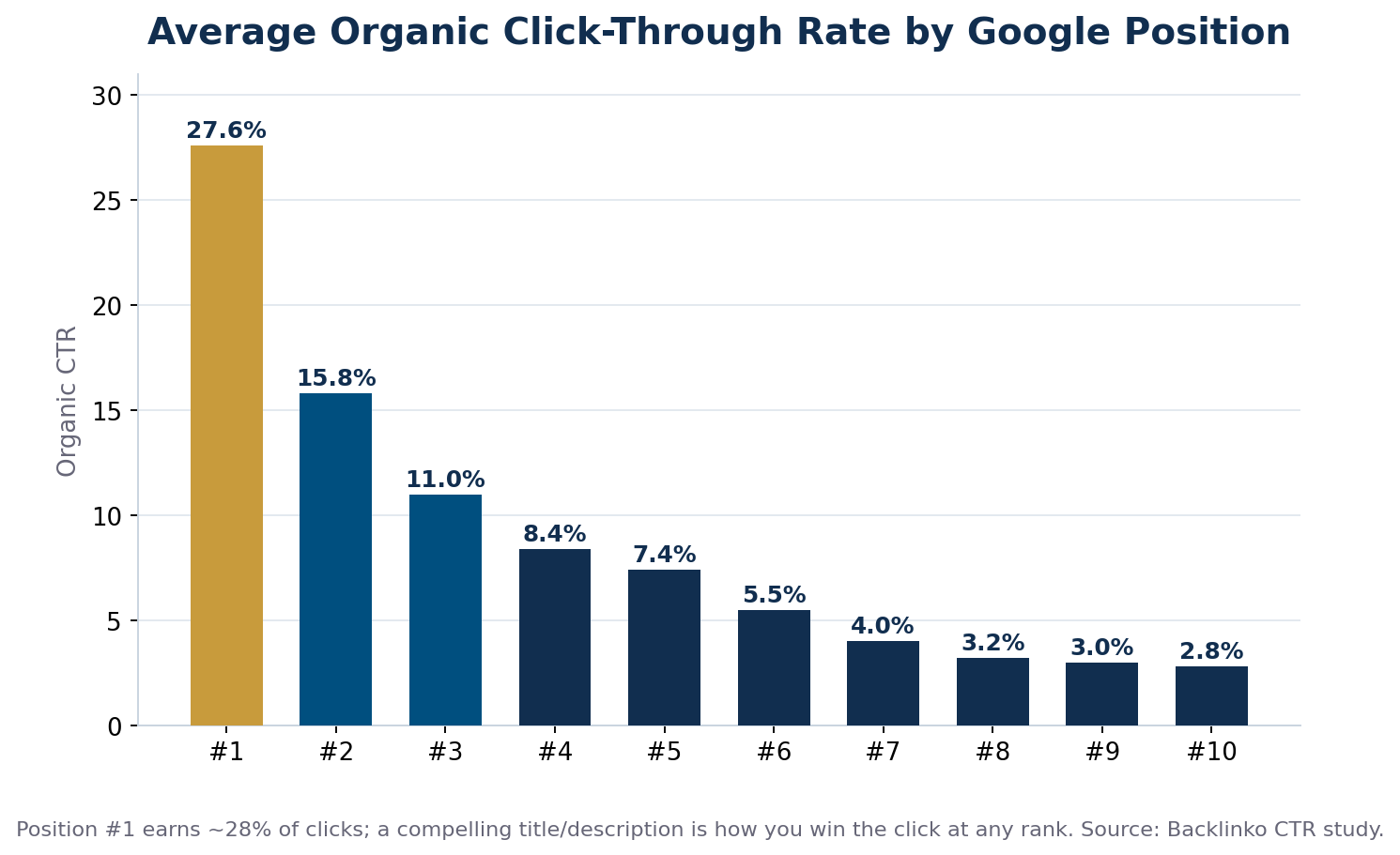
Figure 1: The top result earns about 28% of clicks — a strong snippet is how you win the click at any rank.
There is a second, compounding reason to care. Google now often rewrites weak titles in the results, and it treats snippet engagement as a quality signal. When your title matches intent and your description delivers on it, you get more clicks, longer visits, and stronger relevance signals. Good snippets are the connective tissue between the technical work in our on-page SEO checklist and the traffic that actually shows up in your analytics.
- The top organic result captures about 28% of clicks; snippets decide who wins at every rank.
- Google rewrites titles it judges weak, so writing a strong, intent-matched title keeps you in control.
- Titles and descriptions are the free advertisement for every page you publish — treat them like ad copy.
How to write a meta title that gets clicks
A great title does three jobs at once: it signals relevance to Google, it matches the searcher’s intent, and it stands out from the nine other blue links on the page. Here is the process I use for a title that ranks and earns the click:
- Lead with the primary keyword so both Google and the searcher see the match immediately.
- Keep it to roughly 50–60 characters so it does not get truncated in results.
- Add a specific hook — a number, a benefit, a year, or a differentiator like “checklist” or “guide.”
- Front-load the most important words; the first 30 characters carry the most weight on mobile.
- Make every title unique across your site to avoid keyword cannibalization between pages.
For example, “SEO Tips” is a wasted title. “On-Page SEO Checklist: 12 Elements Google Evaluates” leads with the keyword, sets a clear expectation, and promises something concrete. If two of your pages start competing for the same query, fix it before it costs you rankings — our guide to keyword cannibalization walks through how.
How to write a meta description that earns the click
The description does not directly affect rankings, but it heavily influences whether someone chooses your result. Think of it as the second line of your ad. Expand on the title’s promise, include the keyword naturally so it bolds when it matches the query, and give a concrete reason to click — what the reader will learn, get, or solve. End with a light call to action when it fits.
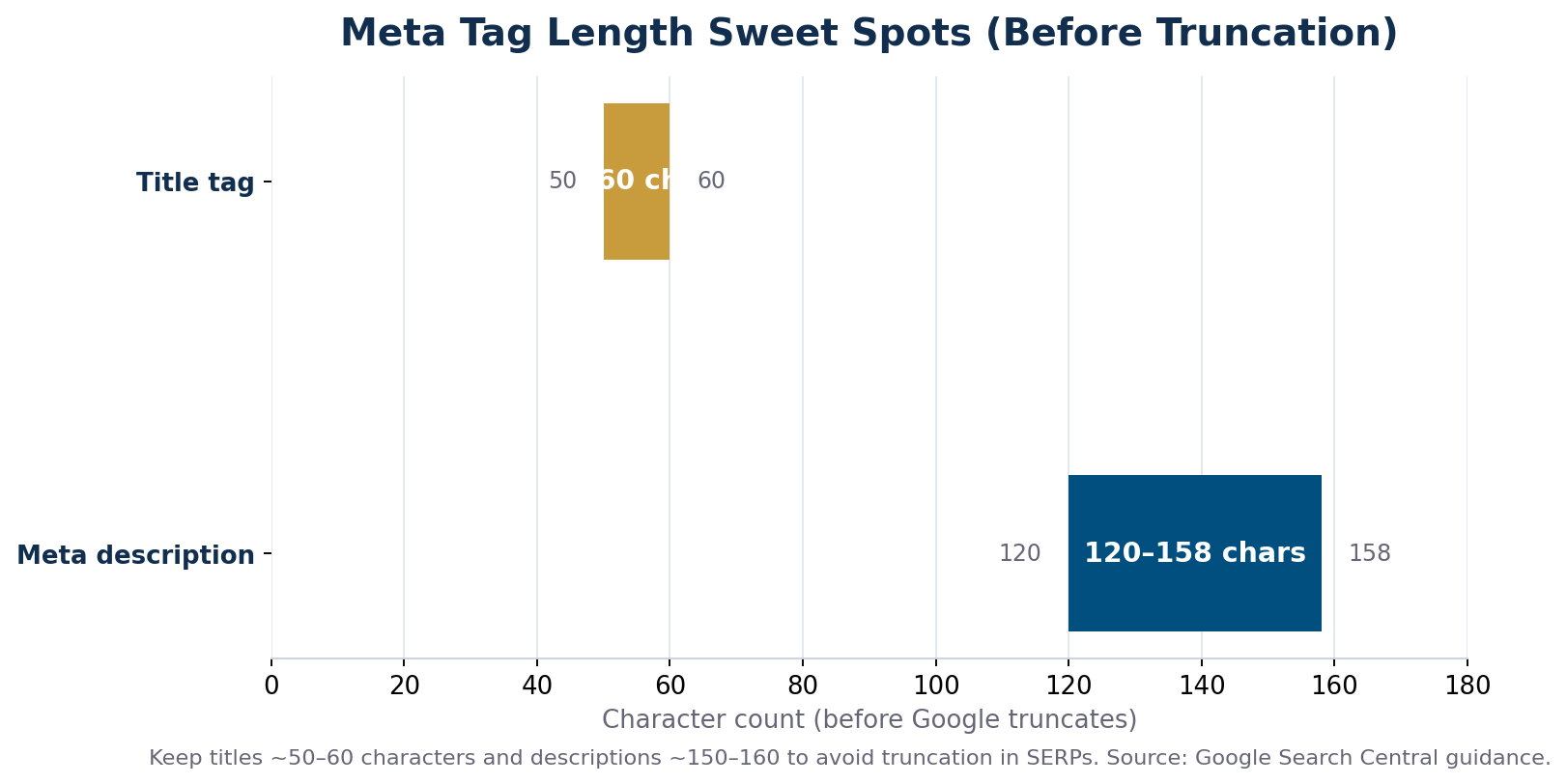
Figure 2: Keep titles around 50–60 characters and descriptions around 150–160 to avoid truncation.
The character ranges above matter because Google truncates long snippets with an ellipsis, cutting off your most persuasive words. Write to the sweet spot: enough room to make the case, short enough that the full message shows. And never leave descriptions blank — if you do, Google pulls a random sentence from the page, which is rarely the one you would have chosen.
Proven snippet formulas and a before/after
You do not have to reinvent the wheel for every page. These formulas consistently perform well across the sites we manage:
| Page type | Title formula | Description angle |
|---|---|---|
| Service page | [Service] in [City] | [Benefit or Brand] | Who you help, the outcome, and a reason to call |
| Blog guide | [Primary Keyword]: [Specific Promise or Number] | What the reader will learn and why it is trustworthy |
| Product/category | [Product] – [Key Feature/Price Signal] | [Brand] | Selection size, shipping, or a differentiator |
Common mistakes that quietly kill your click-through rate
Most snippet problems are not exotic — they are the same handful of issues on page after page. Watch for duplicate titles across templated pages, titles that get truncated because they are too long, missing descriptions that force Google to guess, keyword stuffing that reads like spam, and generic boilerplate that could describe any business. Each one leaves clicks on the table. Auditing and fixing them across a site is one of the highest-ROI SEO tasks there is, which is why it sits near the top of any technical SEO audit we run. If search visibility is a priority for your business, our SEO services cover this end to end.
Frequently Asked Questions
What is the ideal length for a meta title and description?
Keep titles to roughly 50–60 characters and descriptions to about 150–160 characters. Google truncates longer snippets, so writing within these ranges ensures your full, persuasive message appears in the results.
Do meta descriptions affect Google rankings?
Not directly — meta descriptions are not a ranking factor. However, they strongly influence click-through rate, and higher engagement with your result can indirectly support your visibility. A compelling description turns rankings into actual traffic.
Why does Google rewrite my meta titles?
Google rewrites titles when it judges yours too long, keyword-stuffed, duplicated, or a poor match for the query. Writing a concise, unique, intent-matched title that leads with your keyword is the best way to keep the title you wrote.
Should every page have a unique meta title and description?
Yes. Duplicate titles and descriptions confuse search engines about which page to rank and waste your chance to target different queries. Every indexable page should have its own unique, purpose-written pair.
What should I do if I have hundreds of pages?
Use templated formulas that pull in unique variables like product name, category, or location, then hand-write the titles and descriptions for your most important pages. This gives you scale without generic, duplicate snippets.
MEAN Consultors optimizes titles, descriptions, and on-page SEO so the traffic you rank for actually reaches your site.