
On-Page SEO Checklist: Every Element Google Actually Evaluates
Last updated: July 28, 2026 · By Joseph Olivas, Founder, MEAN Consultors · 8 min read
Technical SEO gets your pages crawled and indexed, but on-page SEO is what tells Google what each page is actually about and why it deserves to rank. It is the part of SEO you have the most direct control over — every element lives on the page itself, so there are no algorithms to guess at, just a set of signals to get right. This checklist walks through each element Google evaluates and the quick win for each.
The anatomy of an on-page-optimized page
Every page you want to rank is a stack of signals, from the URL at the top to the page-experience layer underneath. Getting them aligned around a single primary keyword and search intent is the core of on-page SEO.
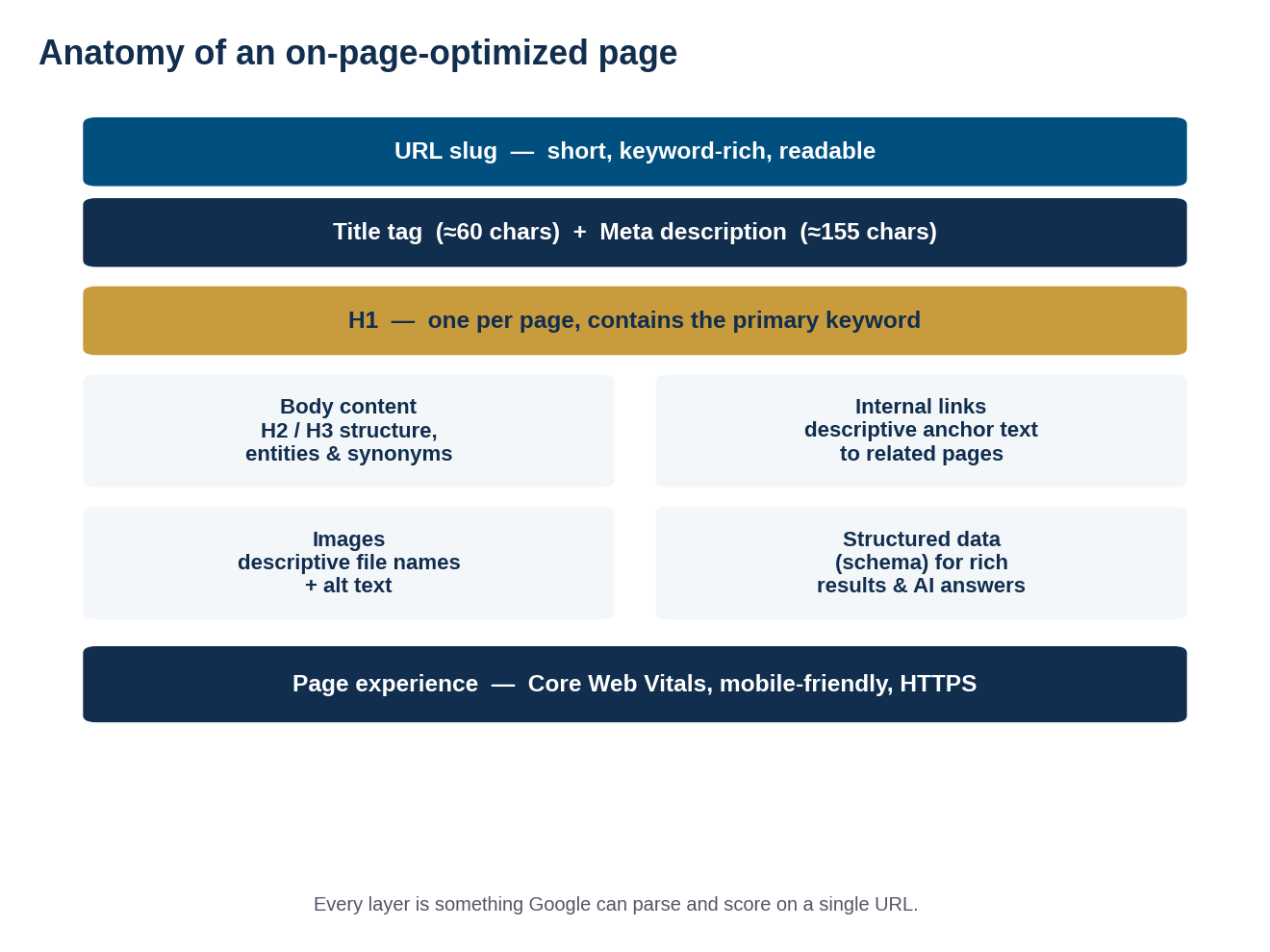
Figure 1: Every layer of a page is something Google can parse and score on a single URL.
The on-page SEO checklist
- Write a unique title tag (~60 characters) that leads with the primary keyword.
- Craft a compelling meta description (~155 characters) — it drives click-through even though it is not a ranking factor.
- Use exactly one H1 per page containing the primary keyword.
- Structure the body with logical H2 and H3 subheadings a reader could skim.
- Cover the topic thoroughly and match search intent — answer the question the query implies.
- Add descriptive internal links with keyword-relevant anchor text.
- Give every image a descriptive file name and alt text.
- Keep URLs short, lowercase, and hyphenated.
- Add structured data (schema) to qualify for rich results and AI answers.
- Make sure the page passes page experience: mobile-friendly, HTTPS, and fast.
Title tags, meta descriptions, and URLs
These three elements are the first thing both Google and searchers see. Title tags carry real ranking weight, so lead with your primary keyword and keep them under roughly 60 characters (about 600 pixels) so they do not get truncated in results. Meta descriptions are not a direct ranking factor, but a sharp one lifts click-through rate, which matters. URLs should be short and descriptive — /on-page-seo-checklist/ beats /page?id=1123 every time.
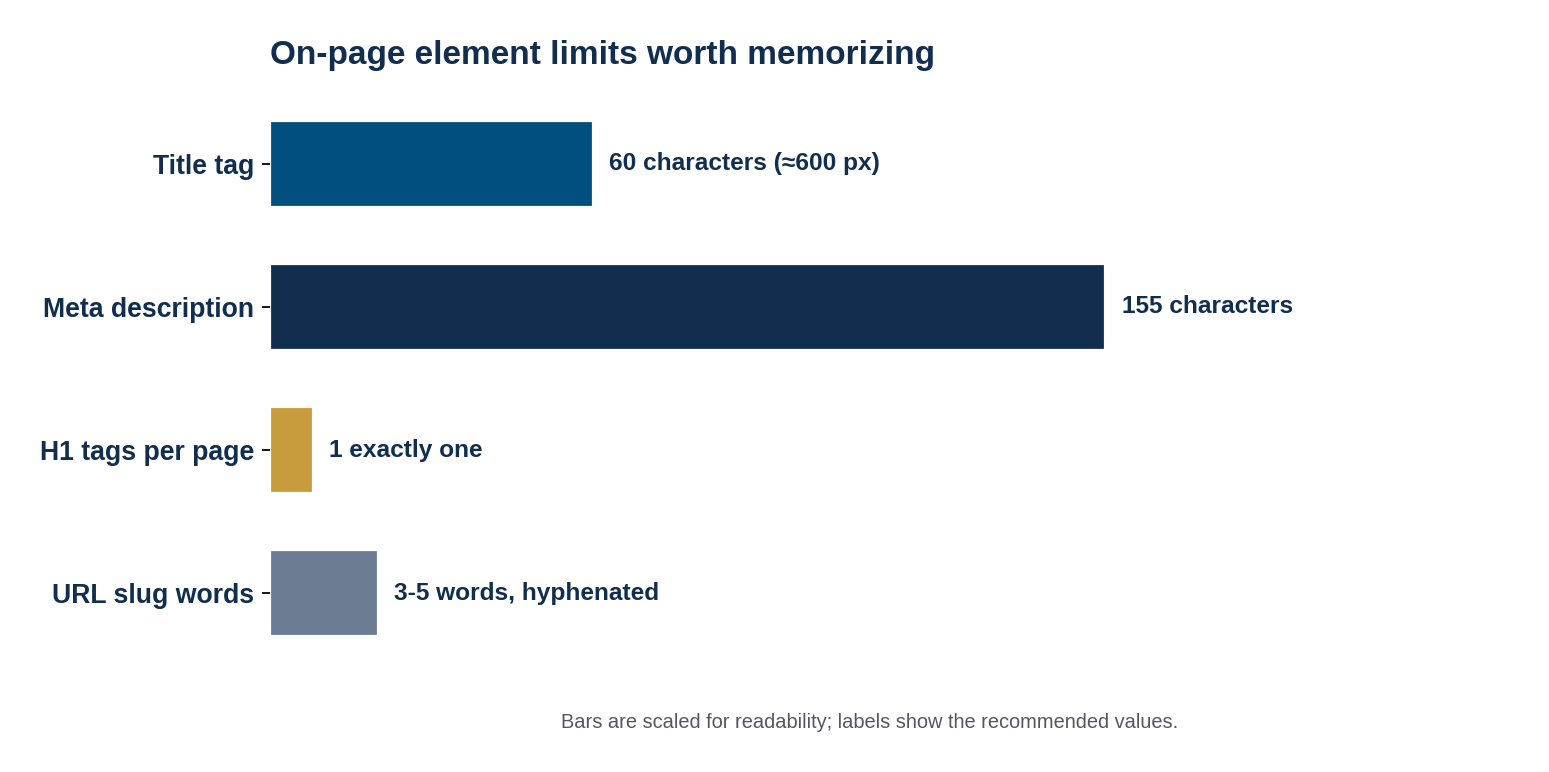
Figure 2: The element limits worth committing to memory.
| Element | What Google evaluates | Quick win |
|---|---|---|
| Title tag | Relevance and primary keyword placement | Front-load the keyword; stay under ~60 chars |
| Headings (H1–H3) | Topic structure and hierarchy | One H1; descriptive H2s that map to subtopics |
| Body content | Depth, intent match, and entities | Answer the query fully; cover related subtopics |
| Internal links | Site structure and topical relationships | Link with descriptive anchors, not “click here” |
| Image alt text | Accessibility and image context | Describe the image; include the keyword naturally |
| Structured data | Eligibility for rich results | Add relevant schema (Article, FAQ, Product) |
- On-page SEO is the most controllable part of SEO — every signal lives on the page.
- Title tags and body content carry ranking weight; meta descriptions win the click.
- One H1, a clean heading hierarchy, and descriptive internal links do most of the work.
Content quality and search intent
The single biggest on-page factor is whether your content satisfies the intent behind the query. A page targeting “on page seo checklist” should be a usable checklist, not a thin definition. Cover the subtopics a searcher expects, use natural language and related entities rather than repeating one phrase, and demonstrate genuine expertise. Google’s guidance consistently rewards content that thoroughly and helpfully answers the question — keyword stuffing works against you.
Search intent comes in a few recognizable flavors, and matching it is non-negotiable. Informational queries (“what is on-page SEO”) want a clear explanation; commercial queries (“best SEO agency”) want comparisons; transactional queries (“hire SEO consultant”) want a clear path to act. If you publish a sales page for an informational query, it will not rank no matter how well it is optimized, because it answers the wrong question. Before writing, look at what already ranks for your target keyword: the format Google is rewarding — guide, checklist, comparison, or tool — tells you the intent you need to satisfy. On-page SEO is not a substitute for content that deserves to rank; it is how you make deserving content legible to search engines.
Remember, too, that on-page SEO is one leg of a three-legged stool. Technical SEO makes your pages crawlable and fast, off-page SEO earns the authority signals like backlinks, and on-page SEO connects your content to the queries it should answer. Weakness in any one caps the others, which is why a coordinated approach beats optimizing a single element in isolation.
Internal links and structured data
Internal links pass authority between your pages and help Google understand how topics relate. Link new articles to your cornerstone pages and vice versa, using anchor text that describes the destination. Structured data, meanwhile, is increasingly important for both traditional rich results and AI-generated answers — marking up articles, FAQs, and products makes your content easier for machines to quote. If duplicate versions of a page exist, resolve them so your signals do not split; our guide to canonical tags covers exactly how. And because on-page and technical work overlap, pair this checklist with a sound site architecture so link equity flows where you want it.
Optimizing on-page content for AI answer engines
A meaningful shift in 2026 is that your pages are increasingly read not just by searchers but by AI answer engines that summarize and cite sources. The same on-page discipline that helps traditional SEO also helps here, with a few emphases. Put a direct, self-contained answer near the top of the page so a machine can lift it cleanly. Use clear question-style headings that mirror how people actually ask. Include at least one concrete, citable data point or table. And mark up FAQs with structured data so answer engines can parse them. None of this is a separate discipline — it is on-page SEO done well, with an eye toward being quotable.
Common on-page SEO mistakes to avoid
The most frequent problems we find during audits are avoidable. Duplicate or missing title tags across many pages waste your strongest on-page signal. Keyword stuffing — repeating the exact phrase unnaturally — now hurts more than it helps. Thin content that does not fully answer the query loses to more thorough competitors regardless of technical polish. Generic anchor text like “read more” wastes the internal-linking opportunity. And targeting the same keyword with multiple pages splits your ranking signals so that neither page performs — a self-inflicted problem known as keyword cannibalization. Fixing these usually produces faster gains than chasing new content.
Frequently Asked Questions
What is on-page SEO?
On-page SEO is the practice of optimizing elements on a web page itself, such as title tags, headings, content, internal links, image alt text, URLs, and structured data, so that search engines understand the page and rank it for relevant queries. It is distinct from technical SEO, which concerns crawling and indexing, and off-page SEO, which concerns backlinks.
How long should a title tag be in 2026?
Aim for about 60 characters, or roughly 600 pixels, so the title does not get truncated in search results. Lead with your primary keyword, keep it unique on every page, and write it for a human as well as the algorithm since it doubles as your headline in the results.
Should each page have only one H1?
Yes. Best practice is exactly one H1 per page that describes the page and contains the primary keyword, followed by H2 and H3 subheadings for structure. Multiple H1s rarely cause a penalty, but a single clear H1 removes ambiguity about the page’s main topic.
Do meta descriptions affect rankings?
Meta descriptions are not a direct ranking factor, but they strongly influence click-through rate from the search results, and a well-written description effectively markets the page. Google may also rewrite your description if it decides another snippet better matches the query.
Is structured data worth adding for on-page SEO?
Yes. Structured data does not guarantee higher rankings, but it makes pages eligible for rich results and makes content easier for AI answer engines to quote. Marking up articles, FAQs, and products is a low-effort, high-upside on-page task.
MEAN Consultors builds SEO into every page we develop — from technical foundations to on-page optimization that earns rankings.