
How Long Does SEO Take to Work? Realistic SEO Timelines for Real Results
Last updated: September 6, 2026 · By Joseph Olivas, Founder, MEAN Consultors · 9 min read
The most common question I get on a discovery call is not about price. It is some version of “how long until this works?” It is a fair question — you are being asked to fund months of work before you can prove it paid off — and the industry has a habit of answering it badly, either with vague optimism or with a shrug. This guide gives you the honest version: what moves first, what moves last, why, and how to tell after 90 days whether your campaign is on track.
What Google says about SEO timelines
Start with the source that matters most. In its official guidance on hiring an SEO, Google states that in most cases SEOs need four months to a year to help a business first implement improvements and then see potential benefit. That is the single most authoritative statement on the topic, and it is deliberately wide because the honest answer depends on where you start.
Independent data supports the longer end of that window for competitive terms. Ahrefs’ widely cited study of two million newly published pages found that only 5.7% of them reached the top 10 for any keyword within a year, and that the average page ranking in the top 10 was more than two years old. Newer pages that did rank quickly overwhelmingly targeted low-competition, long-tail queries. The lesson is not that SEO is slow; it is that authority compounds, and pages without it need time or help to catch up.
One important caveat: those studies measure pages from scratch. An established business site with a few years of history, some natural links, and a clean technical base starts much further along than a brand-new domain. That is why the first step in any SEO engagement we run is an audit — you cannot estimate a timeline without knowing the starting line.
The realistic SEO timeline, phase by phase
Figure 1 shows the planning model we use for an established small business site in a moderately competitive market. Your bars will shift left or right depending on the factors in the next section, but the order in which things move is remarkably consistent.
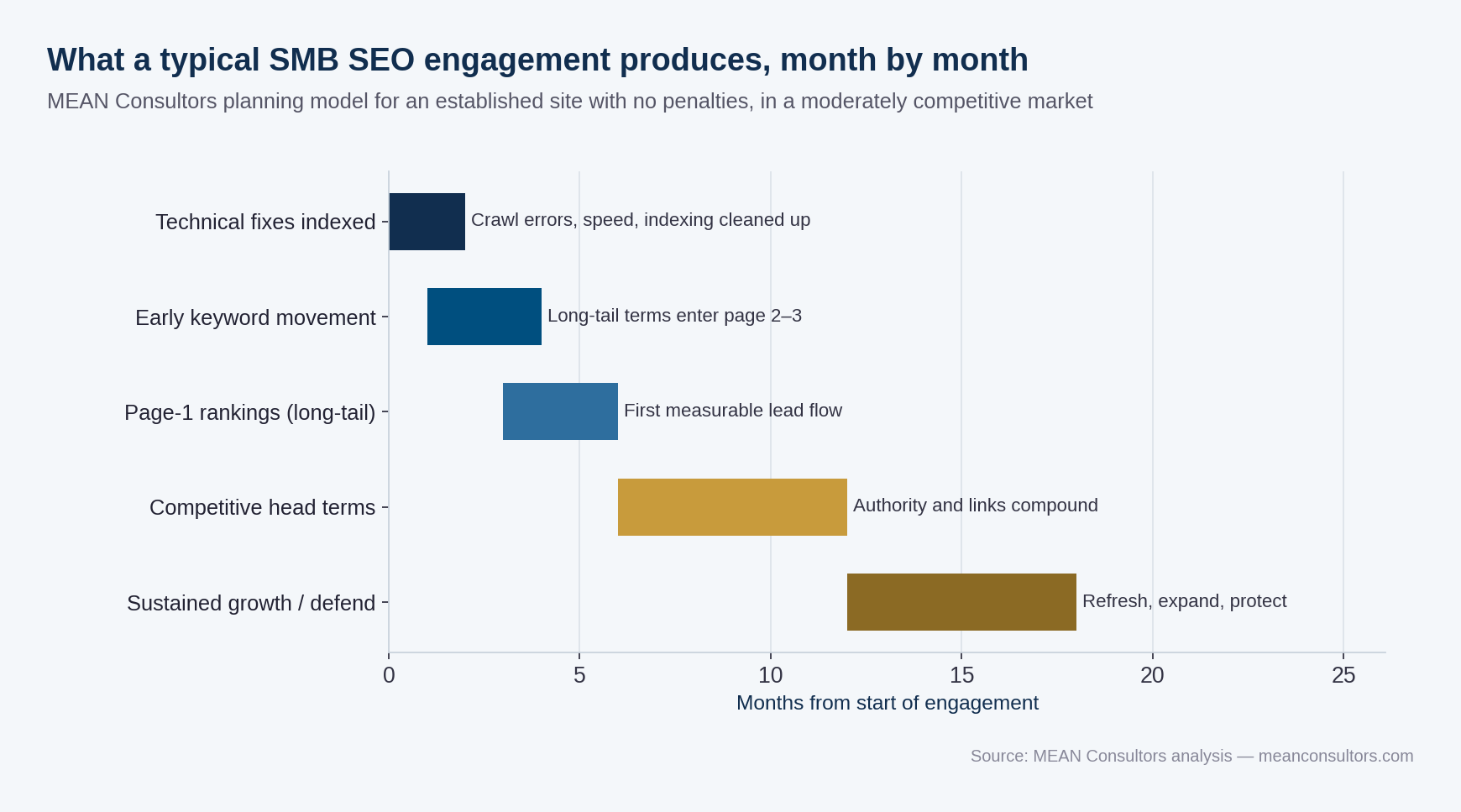
Figure 1: Our month-by-month planning model — technical wins arrive first, competitive head terms last.
Months 0–2: technical foundation and indexing
The first weeks are spent fixing what stops Google from understanding your site: crawl errors, broken redirects, slow pages, duplicate content, missing or wrong canonicals, thin or orphaned pages. These changes are picked up as Google recrawls, which for a mid-size site typically happens over days to a few weeks. You will see the effects in Google Search Console coverage and Core Web Vitals reports before you see them in rankings. If a rebuild is involved, our web development team handles the performance layer in parallel.
Months 1–4: early keyword movement
Once the technical base is sound and the first round of optimized or new content is indexed, long-tail keywords start moving from nowhere to positions 15–30. This is invisible to most business owners because nothing is on page one yet, but it is the most important signal that the strategy is correct. We track it as “keywords in the top 30” and expect that number to grow steadily from month two onward.
Months 3–6: first page-one rankings and lead flow
Long-tail and local queries — “commercial HVAC maintenance Jacksonville,” “custom inventory software for distributors” — reach page one. These are lower-volume terms, but they convert well because the intent is specific. This is usually where a client sees the first leads they can attribute directly to organic search. If your campaign has produced no page-one movement on any target term by month six, something is wrong with the strategy, the execution, or the competitive assessment.
Months 6–12: competitive head terms
Broader, higher-volume terms require authority: links from relevant sites, a body of content that covers the topic thoroughly, and sustained engagement signals. These typically break into page one between months six and twelve for an established site, and can take longer in saturated markets like legal, insurance, or software. This is the phase where consistency pays off and where stop-start budgets do the most damage.
Months 12+: compounding and defending
After a year, the work shifts from climbing to compounding: refreshing content that is slipping, expanding into adjacent topics, earning links to pages that are already ranking, and protecting positions from competitors who noticed you. Well-run campaigns tend to show their best return in year two because the fixed costs of the foundation are already paid.
- Google’s own guidance sets expectations at four months to a year; anyone promising page-one rankings in 30 days is describing something other than SEO.
- Only 5.7% of new pages reach the top 10 within a year in Ahrefs’ study — the pages that do are low-competition, which is why long-tail wins come first.
- In our model, technical indexing gains land in 0–2 months, long-tail page-one rankings in 3–6, and competitive head terms in 6–12.
Six factors that change your SEO timeline
When two businesses start SEO the same month and one sees results twice as fast, the difference is almost always one of the variables in Figure 2. We weight them roughly as shown when estimating a client’s timeline.
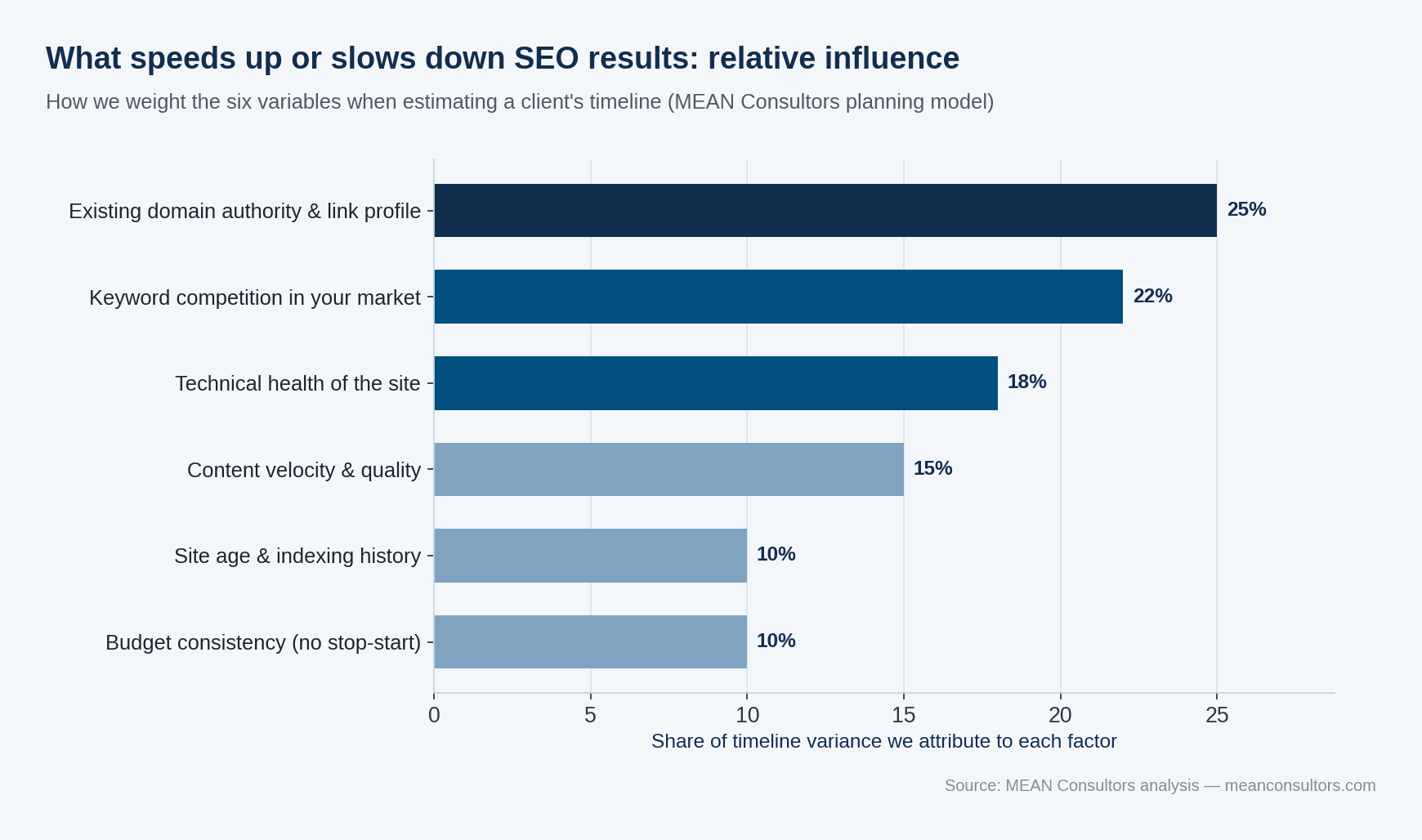
Figure 2: Existing authority and market competition account for nearly half of the variance in how fast results arrive.
| Factor | Speeds results when… | Slows results when… |
|---|---|---|
| Domain authority & links | Site has years of natural links and mentions | New domain, or links are mostly low-quality directories |
| Keyword competition | Local or niche B2B market with weak competitors | National terms dominated by aggregators and enterprise brands |
| Technical health | Fast, indexable site with clean architecture | Slow, duplicate-heavy, or partially blocked site (see the audit link below) |
| Content velocity & quality | 4+ substantive, well-targeted pages per month | Sporadic thin posts, or content that duplicates existing pages |
| Site age & history | Established domain with no penalties | Past spam tactics, manual actions, or a recent botched migration |
| Budget consistency | Steady monthly investment for 12 months | Pausing after 3–4 months, right before compounding begins |
Two of these are worth calling out. Technical health is the factor you control fastest; a proper SEO audit before you hire anyone tells you in a week whether your site is holding you back. Budget consistency is the factor businesses sabotage most often. Pausing at month four because “nothing has happened yet” typically discards the work right before it converts, and restarting six months later means rebuilding momentum from a lower base.
How to tell after 90 days whether SEO is working
You should not wait a year to evaluate an SEO campaign. You should wait a year to evaluate its revenue, but leading indicators show up far earlier. At the 90-day mark, I expect a client to be able to check every item below using Google Search Console and their analytics — no agency-produced dashboard required.
- Indexing is clean: Search Console shows the important pages indexed, and the count of errors and excluded pages has dropped since the baseline.
- Impressions are rising: total organic impressions are up month over month, even if clicks have not followed yet. Impressions move first.
- Keywords in the top 30 are growing: more target terms appear in positions 11–30 than at the start. This is the clearest 90-day signal.
- New content is indexed and ranking for something: every published page has at least a few impressions within two to three weeks of going live.
- Technical fixes are verified: Core Web Vitals pass or improve; redirects and canonicals resolve correctly.
- Reporting ties to business metrics: your agency reports leads, calls, or form fills from organic — not just rankings. If they cannot, read our guide to SEO KPIs that reflect revenue.
If those boxes are checked at 90 days, the campaign is on track even though revenue has not moved much. If impressions and top-30 keywords are flat after 90 days of active work, ask hard questions — and ask them now, not at month nine.
Can you speed SEO up?
Partly. You cannot buy authority quickly without risking penalties, and you cannot make Google crawl faster than it wants to. But you can compress the timeline in three legitimate ways. First, fix technical issues in the first month rather than spreading them over a quarter; every week of crawl waste delays everything downstream. Second, prioritize long-tail and local terms that can rank in months three to six so the campaign produces leads while the head terms mature. Third, refresh and consolidate content you already have instead of only publishing new pages — updated pages with existing links move much faster than new ones.
What does not work: buying links in bulk, publishing dozens of thin AI-generated pages, or chasing keyword volume without matching intent. Those tactics sometimes produce a short spike and reliably produce a longer setback. If you are evaluating vendors, our guide to questions to ask an SEO agency before signing includes the timeline questions that separate honest firms from optimistic ones.
The bottom line for a U.S. small or mid-size business: plan for 4 to 6 months to see measurable movement, 6 to 12 months to see meaningful revenue impact, and commit for a full year before judging the return. Done well, SEO is the one marketing channel whose cost per lead falls the longer you run it — but only if you give it the runway it needs.
Frequently Asked Questions
How long does SEO take to work?
For most small and mid-size businesses, SEO takes 4 to 12 months to produce results visible in leads and revenue. Google’s official guidance sets the same expectation: four months to a year to implement improvements and see benefit. Technical fixes register within weeks, long-tail keywords reach page one in roughly 3 to 6 months, and competitive terms take 6 to 12 months or more.
Why does SEO take so long?
Google must recrawl and re-evaluate your pages, and rankings for competitive terms depend on authority signals — links, content depth, engagement — that accumulate over time. Ahrefs found that only 5.7% of newly published pages reach the top 10 within a year, and the average top-10 page is over two years old.
What SEO results should I see in the first 3 months?
Cleaner indexing in Google Search Console, rising organic impressions, more target keywords entering positions 11–30, and new content receiving impressions within weeks of publishing. Revenue impact is usually not yet visible at 90 days, but these leading indicators should be.
Can SEO results happen faster for a local business?
Often, yes. Local and niche B2B queries have less competition, so page-one rankings for specific terms can arrive in 3 to 6 months on an established site. A brand-new domain or a highly competitive national market will take longer.
Is it normal to see no results after 6 months of SEO?
No. By month six an active campaign on a healthy site should show page-one rankings for at least some long-tail terms and measurable growth in impressions and top-30 keywords. If nothing has moved, review the strategy, the execution, and the competitive assessment before continuing.
How long should I commit to an SEO campaign before judging it?
Commit for at least 12 months, but evaluate leading indicators at 90 days and page-one progress at 6 months. Stopping at month three or four typically discards the foundation right before results compound.
Does a new website reset my SEO timeline?
It can if the migration is handled poorly — lost redirects, changed URLs, or blocked pages can erase years of progress. A well-executed rebuild with proper 301 redirects and preserved content usually causes only a brief fluctuation and can accelerate results by fixing technical debt.
- Google Search Central, “Do you need an SEO?” — states SEOs need four months to a year to implement changes and see benefit
- Ahrefs, “How Long Does It Take to Rank in Google?” — study of two million pages; 5.7% reached the top 10 within a year
- Google Search Central, “In-depth guide to how Google Search works” — crawling, indexing, and ranking stages
MEAN Consultors starts every SEO engagement with an audit and agreed 90-day, 6-month, and 12-month targets, so you always know whether the work is on track.