
Red Flags When Hiring a Software Development Agency: 8 Warning Signs to Catch Before You Sign
Last updated: September 5, 2026 · By Joseph Olivas, Founder, MEAN Consultors · 9 min read
A meaningful share of the custom software work MEAN Consultors takes on is inherited: a business paid another vendor for a platform, and now the platform is late, fragile, or owned by someone else. Reading the original proposals afterward, the warning signs were almost always visible on page one. This article lists the eight red flags I look for, rated by severity, along with where in the engagement each one tends to show up. It complements our positive-side vetting checklist for choosing a custom software development company; that post tells you what to look for, this one tells you what to run from.
The eight red flags, rated by severity
Not all warning signs are equal. Some are minor friction; others reliably predict a failed project. The chart below reflects how we rate each one based on the rescue and re-platform projects we have taken over from other vendors.
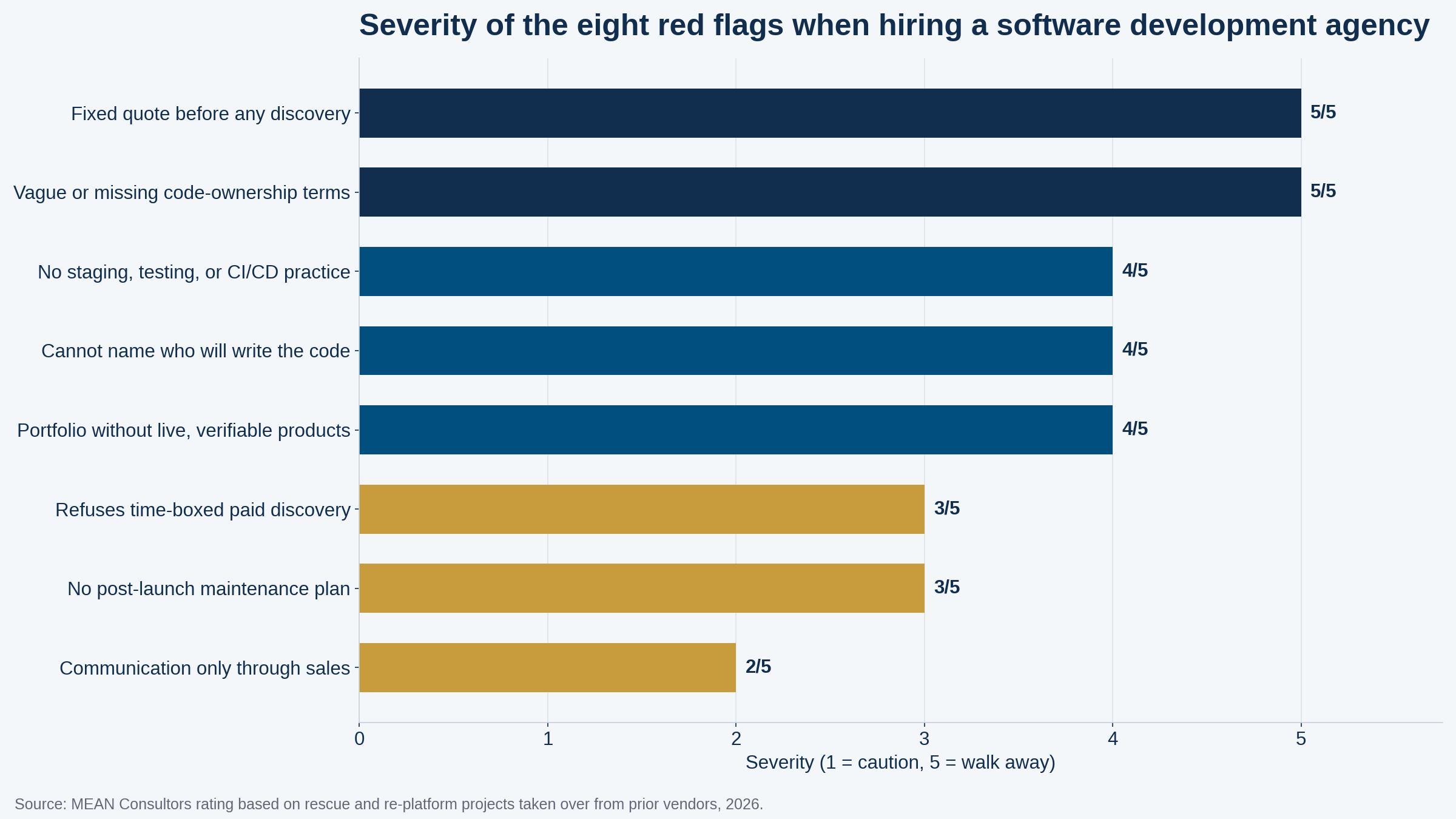
Figure 1: MEAN Consultors’ severity rating for each red flag, from 1 (proceed with caution) to 5 (walk away).
| Red flag | Severity | What it usually costs you |
|---|---|---|
| 1. Fixed quote before discovery | 5 | Change orders or a build that fits the quote instead of the business |
| 2. Vague code-ownership terms | 5 | Inability to switch vendors without rebuilding |
| 3. No staging, tests, or CI/CD | 4 | Production outages and regressions on every release |
| 4. Cannot name the engineers | 4 | Silent subcontracting; quality and continuity you cannot assess |
| 5. Unverifiable portfolio | 4 | Paying for experience the team does not have |
| 6. Refuses paid discovery | 3 | Scope defined by the vendor’s assumptions, not your operations |
| 7. No post-launch plan | 3 | Unpatched dependencies and no one to call when something breaks |
| 8. Sales-only communication | 2 | Requirements lost in translation; slow answers to technical questions |
- The two severity-5 flags are both about money and control: an unreliable number and an unreliable claim to what you paid for.
- Flags 3 through 5 are about engineering practice; each is easy to verify in a single call if you ask directly.
- Flags 6 through 8 are yellow rather than red on their own, but two or more together usually indicate a sales-driven shop.
1. A fixed price before anyone has done discovery
Custom software is custom because your workflows, data, integrations, and exceptions are not fully known until someone maps them. A vendor who quotes a firm number on the first call is either padding heavily to cover the unknowns or planning to make it up in change orders once the real scope surfaces. Neither is in your interest. The Standish Group’s long-running CHAOS research has consistently found that a minority of software projects finish on time, on budget, and with the intended features, and unclear requirements are among the most-cited reasons. The fix is a paid, time-boxed discovery phase that produces a specification and an estimate you can hold the vendor to. We explain how the pricing models differ in fixed price versus time and materials contracts.
2. Vague or vendor-favoring code-ownership terms
Read the intellectual property clause before you read the price. You want unambiguous language: all deliverables, source code, and documentation are assigned to you upon payment, hosted in a repository your organization controls, with the agency retaining rights only to clearly named pre-existing libraries. Red-flag versions include “licensed for use,” ownership transferring only after a support term, or no IP clause at all. In practice, vendor-owned code means you cannot hire anyone else to touch it, which turns every future feature into a negotiation. Our post on third-party vendor risk when vetting a development partner covers the contract language in more depth.
3. No staging environment, automated tests, or deployment pipeline
Ask three plain questions: Will I have a staging URL where I can test features before they go live? What automated tests will exist? How does code get from a developer’s laptop to production? A competent agency answers all three in a sentence each. If the answers are “we test carefully” and “we upload the files,” you are looking at a shop that will break production regularly and blame your data. The practices are not exotic; our explainer on CI/CD and software reliability describes what a baseline setup looks like, and it is fair to expect one on any project over a few weeks.
4. The agency cannot tell you who will write your code
Subcontracting is not inherently bad; undisclosed subcontracting is. Ask for the names and roles of the people who will work on your project, how long they have been with the agency, and whether any part of the work will be handed to third parties. Then ask to speak to the lead engineer, not the account manager. If the agency will not put an engineer on a call before the contract is signed, assume the team you are buying is not the team on the website. Our guide to how software development outsourcing actually works explains the common staffing models so you know what to ask about.
- Named lead engineer and team, with tenure, in the proposal
- Explicit statement of any subcontracting and where those people are located
- Technical call with the lead engineer before signing
- Written notice required before team changes mid-project
5. A portfolio you cannot verify
A wall of logos and polished screenshots tells you what the agency’s designer can do. Ask for live URLs or demo access to two or three comparable products, which parts of each the agency built, and whether the people who built them are still there. Then ask for a reference call with that client. An agency proud of its work will make this easy. One that cites confidentiality for every single project is either exaggerating its role or has no clients willing to vouch for it.
6. Refusing a paid discovery phase
A short paid discovery, typically one to three weeks, is the cheapest insurance in custom software. It produces a requirements document, an architecture outline, and an estimate grounded in your actual operations. It also lets you experience how the agency communicates before you commit six figures. An agency that pushes past discovery to a large contract is optimizing for its close rate. If you need help preparing, our template for a software requirements document non-technical founders can use is a good starting point to bring to that phase.
7. No plan for what happens after launch
Software is never finished. Frameworks release security patches, third-party APIs change, hosting bills arrive. A responsible proposal includes a maintenance option with defined response times, a patching cadence, monitoring, and a rate for new work. Two warning signs here: no plan at all, or a mandatory support contract that is the only route to documentation or repository access you have already paid for. The former leaves you exposed; the latter is lock-in with a friendlier name. We covered realistic figures in software maintenance budgets after launch.
8. Every conversation runs through sales
This is the mildest flag on the list, but it compounds the others. If the only person you can reach is the account executive, technical questions take days to answer and requirements get paraphrased twice before an engineer reads them. Good agencies put a technical lead in every meaningful conversation from the second call onward, and they give you a direct channel, usually a shared project tool or chat, once work begins.
Where the red flags show up
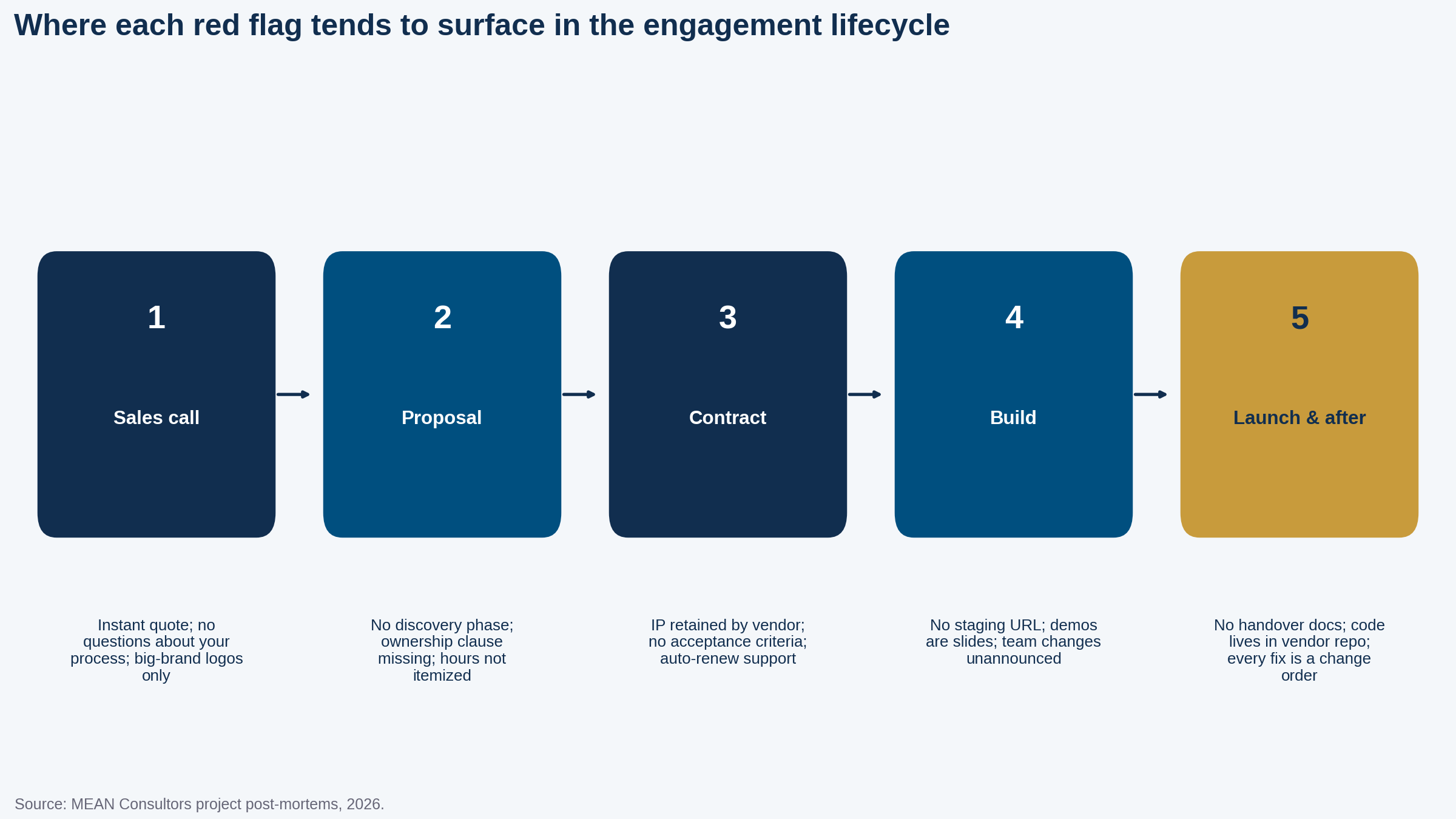
Figure 2: Where each warning sign typically surfaces, from the first sales call through post-launch support.
The reason this timeline matters is that the cheapest moment to act on a red flag is the earliest one. A premature quote costs you nothing to walk away from on a sales call. An IP clause costs you a lawyer’s hour at the proposal stage. By the time you discover there is no staging environment, you are three months and a deposit in. Front-load your skepticism.
The OWASP Foundation’s Software Assurance Maturity Model is a useful, vendor-neutral reference if you want a more formal framework for evaluating an agency’s engineering practices; asking a vendor where it sits on a model like that is a fair question, and a good vendor will have an answer.
Frequently Asked Questions
What are the biggest red flags when hiring a software development agency?
The most serious are a fixed price quoted before any discovery, unclear or vendor-favoring code-ownership terms, no staging or automated testing practice, and an inability to name the actual engineers who will write your code. Each of these predicts either a budget blowout or a product you cannot take with you when the relationship ends.
Is a fixed-price software quote always a red flag?
Not always. A fixed price after a paid discovery phase that produced a written specification is a reasonable model. The red flag is a fixed price offered before anyone has understood your workflows, integrations, and edge cases; that number is either padded heavily or will be renegotiated through change orders once the real scope appears.
Who should own the source code in a custom software project?
You should, in full, upon payment, with the code hosted in a repository your organization controls. It is acceptable for an agency to retain rights to generic internal libraries or frameworks it brings to every project, but that carve-out must be explicit and narrow. Vendor-owned code is the single most expensive lock-in to escape.
How can I verify a development agency’s portfolio?
Ask for live URLs or demo access to two or three products, then ask which parts of each the agency actually built and who on the current team worked on them. Follow up by requesting a reference call with the client. Screenshots and logo walls without verifiable products are not evidence.
Should I pay for a discovery phase before committing to a full build?
Yes, in most cases. A time-boxed discovery of one to three weeks produces a specification, architecture outline, and a reliable estimate, and it lets you evaluate how the agency works before you commit to the full budget. An agency that refuses paid discovery and pushes straight to a large contract is optimizing for its close rate, not your outcome.
What should a software agency’s post-launch support look like?
A written maintenance plan covering security patches, dependency updates, hosting and monitoring, bug-fix response times, and a clear rate for new features. It should be optional rather than mandatory, and it should not be the only way to obtain documentation or repository access you already paid for.
MEAN Consultors’ software development engagements start with paid discovery, name the engineers, and assign you the code.