
Link Building in 2026: What Still Works After the Spam Updates
Last updated: August 4, 2026 · By Joseph Olivas, Founder, MEAN Consultors · 8 min read
“Is link building dead?” is the wrong question. What died is the shortcut version of it. Google’s December 2024 and October 2025 spam updates were explicitly aimed at manipulated links, and they were effective. But the underlying signal — that other trustworthy sites vouch for you — is as important as ever. This guide covers what still moves the needle, what to stop doing immediately, and how to build authority that survives the next update instead of collapsing under it.
What actually changed with the spam updates
Google no longer waits for spam to accumulate and then reacts. Its SpamBrain system now continuously reassesses a site’s entire backlink profile with machine learning, and it treats large-scale link buying and exchange schemes as a domain-level risk rather than a per-link one. The December 2024 update targeted link networks that had gone undetected for years, and the October 2025 update named a new violation category: AI-generated guest-post farms that publish thin machine-written content only to embed paid links.
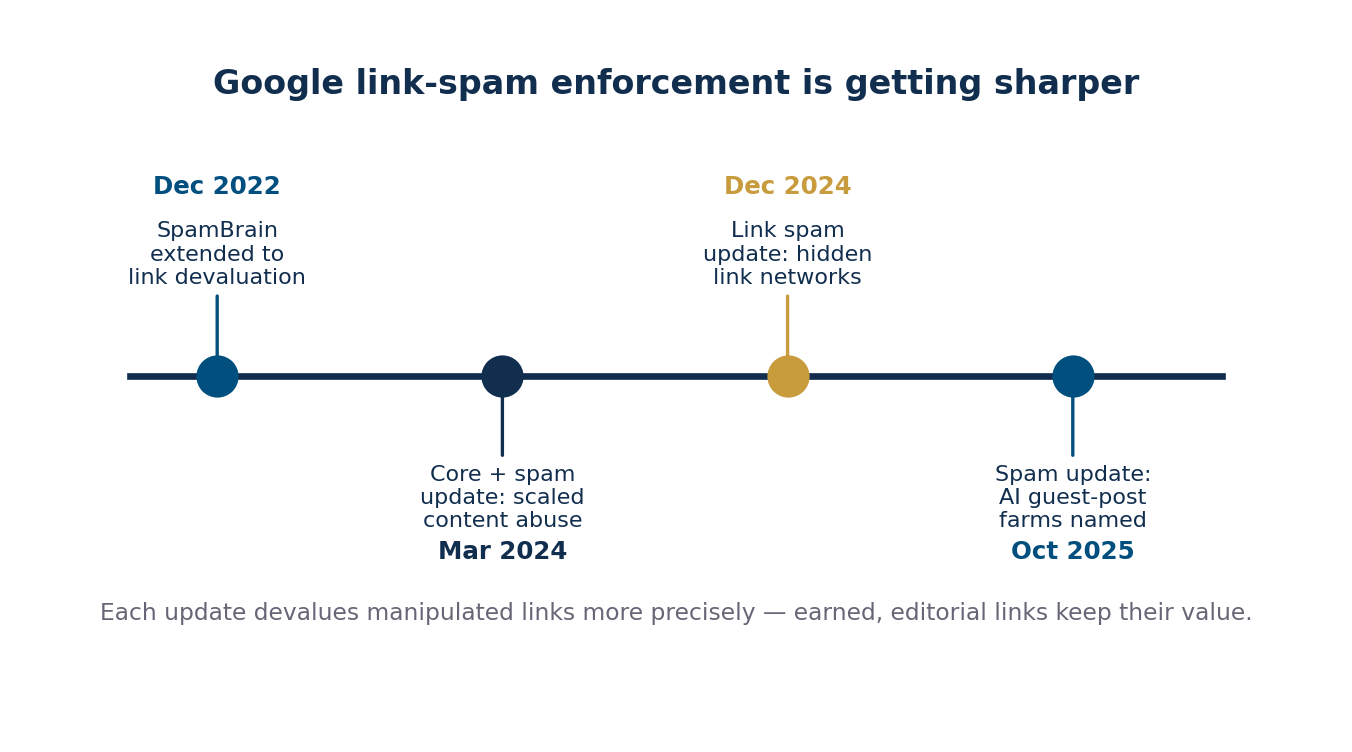
Figure 1: Google’s link-spam enforcement has grown steadily more precise since SpamBrain began devaluing links in 2022.
The practical consequence is important: modern devaluation is precise enough that Google can strip the value from the contaminated portion of a link profile without necessarily penalizing the whole site. That is good news for honest sites — a few bad links you did not build are unlikely to sink you — and bad news for anyone whose rankings depend on manipulated links, because those links now count for nothing. Our SEO services start from this reality rather than fighting it.
The tactics that still work in 2026
Everything that survives has one thing in common: the link is earned because the content deserves it. Here are the approaches we rely on.
- Original research and data. Publish a statistic, survey, or benchmark no one else has, and journalists and bloggers will cite it — each citation is a natural, editorial link.
- Digital PR. Turn a genuine story, milestone, or expert opinion into coverage on real publications your audience reads.
- Expert contributions. Real bylines and quotes from real people on reputable, relevant sites — the opposite of the guest-post farms Google now targets.
- Best-resource content. Being the most complete, up-to-date answer on a topic attracts links passively for years.
- Relationship-based outreach. Building real connections with people in your niche who link because your work is useful, not because money changed hands.
What makes a link actually count
Not all links are equal, and the weighting has shifted. Raw domain authority still matters, but relevance and editorial placement now carry more weight than a high metric on an unrelated site. The chart below shows how we weigh the factors that make a 2026 link durable when we audit a client’s profile.
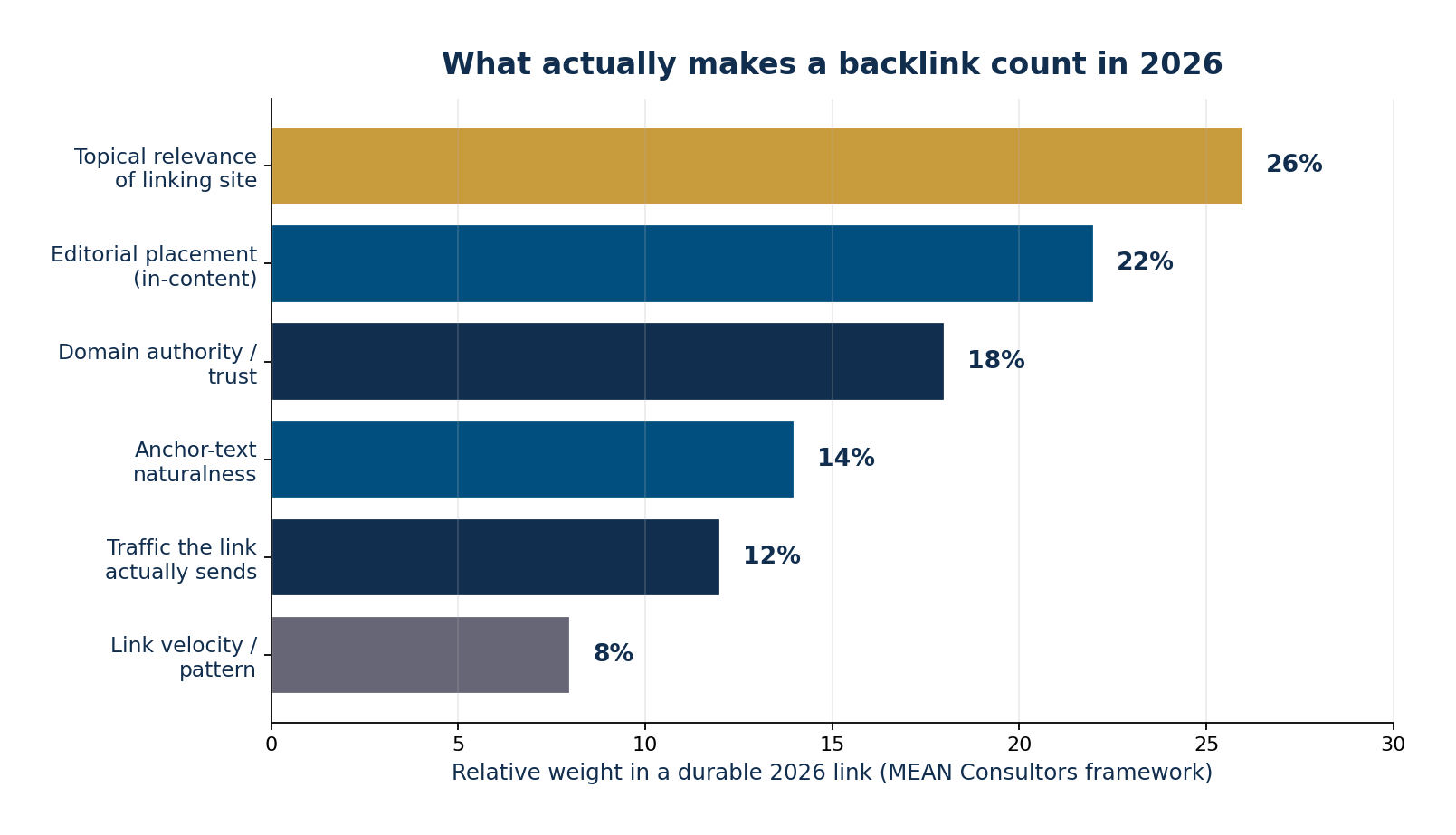
Figure 2: How MEAN Consultors weighs the ingredients of a durable backlink (our framework, not a Google metric).
A link from a smaller site in your exact niche, placed inside relevant content, is worth more than a link from a large but unrelated domain buried in a footer. That is why link building and on-page relevance work together — a link only helps if the page it points to clearly deserves to rank. Pair your outreach with a solid on-page SEO checklist so the authority you earn actually converts into rankings.
| Signal | 2020 emphasis | 2026 emphasis |
|---|---|---|
| Sheer number of links | High | Low |
| Topical relevance | Medium | Very high |
| Editorial (in-content) placement | Medium | Very high |
| Exact-match anchor text | High | Low (looks manipulated) |
| Real referral traffic | Ignored | Increasingly valued |
What to stop doing immediately
Some tactics are now liabilities. Buying links, participating in link exchanges, private blog networks, and paying for AI-written guest posts on low-quality sites are all explicitly in Google’s crosshairs. Because enforcement is now domain-level, these can put your whole site at risk, not just the pages they point to.
- The December 2024 and October 2025 spam updates devalued link networks, paid placements, and AI guest-post farms — and enforcement is now continuous and domain-level.
- Relevance and editorial placement now outweigh raw link count and high authority on unrelated sites.
- Earned links from original data, digital PR, and genuine expertise are the only durable strategy left.
Authority is more than links
Links are one input to authority, not the whole thing. Google increasingly rewards sites that demonstrate real expertise and consistency across a topic. Local businesses have an extra lever here: consistent citations and mentions across the web still reinforce trust, as we cover in local citations that still matter in 2026. Combine earned links, a strong on-page foundation, and topical depth, and you build authority that no single algorithm update can erase.
Frequently Asked Questions
Is link building still worth it in 2026?
Yes. Earned, editorial links remain a meaningful ranking signal. What is no longer worth it is buying links or using networks and guest-post farms, which Google now devalues or penalizes. The return on investment has moved toward quality and relevance over volume.
How many backlinks do I need to rank?
There is no magic number. A handful of highly relevant, editorially placed links from trusted sites in your niche can outperform hundreds of low-quality ones. Focus on relevance and the quality of the page you are linking to rather than a target count.
Can bad backlinks hurt my site?
A few spammy links you did not build are usually devalued rather than penalized, thanks to more precise enforcement. The real risk comes from actively participating in link schemes at scale, which Google now treats as a domain-level problem. If you inherited a manipulated profile, focus on earning good links rather than obsessing over disavowing every bad one.
Does guest posting still work?
Genuine guest contributions — real expertise, on relevant and reputable sites, written for readers — still work. What Google targets is the industrialized version: thin, AI-generated posts on low-quality sites created only to place paid links. The intent and quality are what separate the two.
How long does it take for link building to affect rankings?
Typically weeks to a few months. Google has to crawl and reassess the linking pages, and rankings respond gradually as authority accumulates. Link building is a compounding, long-term investment, not an overnight switch.
MEAN Consultors builds authority the durable way — through original content, digital PR, and technical SEO that earns links instead of buying them.