
Site Architecture for SEO: How to Structure a Website That Scales
Last updated: July 27, 2026 · By Joseph Olivas, Founder, MEAN Consultors · 9 min read
Most SEO advice focuses on individual pages — this keyword, that title tag. But the structure connecting those pages is what decides whether they ever get found. I have audited sites with excellent content that Google barely crawled because everything was buried five clicks deep or floating with no internal links. Architecture is the unglamorous foundation that makes everything else work, and it is the first thing I look at on a technical review.
Why architecture is an SEO multiplier
Search engines discover pages by following links. When your structure is shallow and logical, crawlers reach every important page quickly and revisit it often. When it is chaotic, pages get crawled late, indexed inconsistently, or missed entirely. Architecture also controls how authority flows: internal links pass ranking signals, so a page linked from your homepage and several relevant articles is telling Google it matters. Get the structure right and every other optimization compounds. For a full pass on the technical layer around this, start with my technical SEO audit checklist.
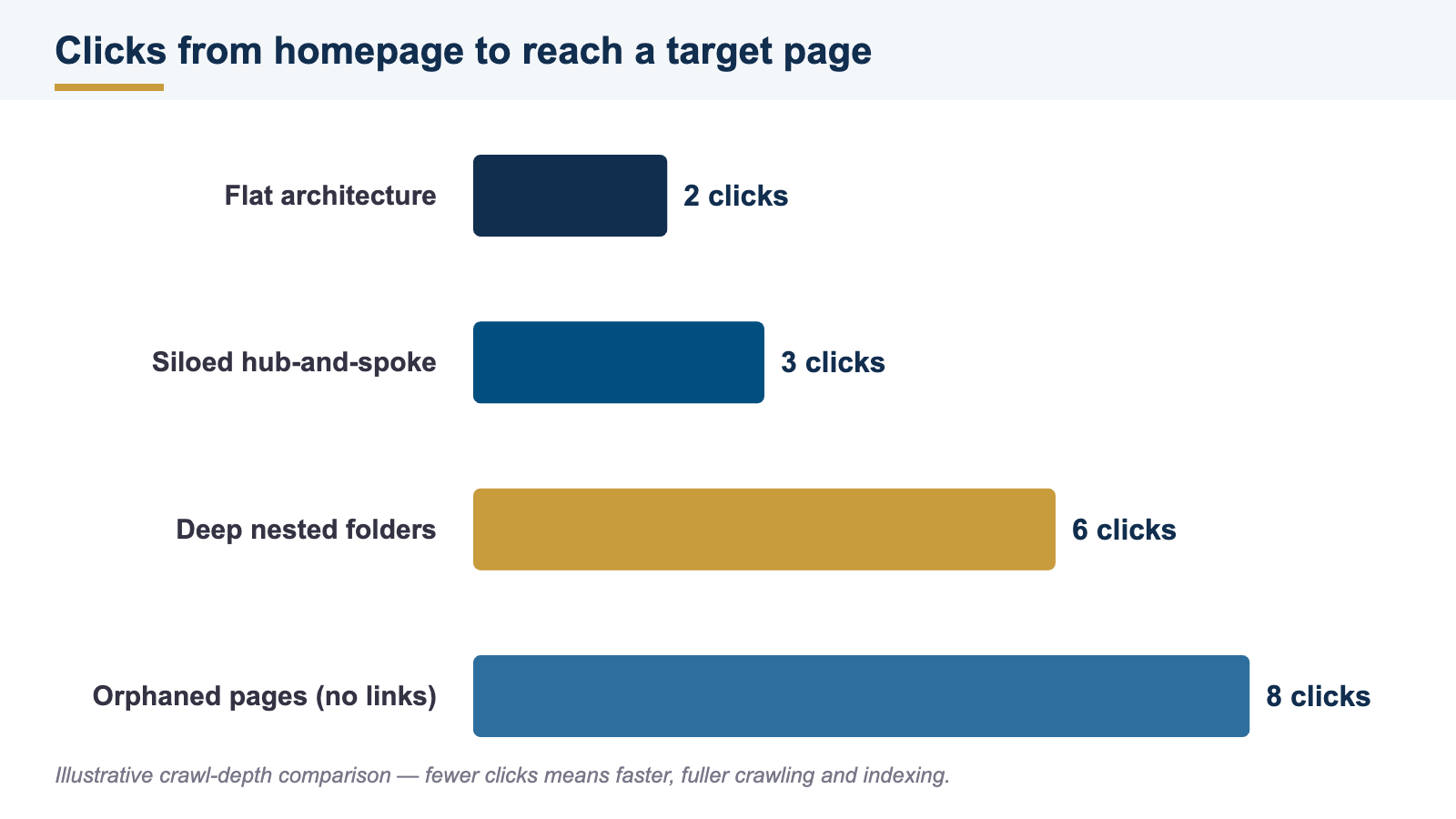
Figure 1: The deeper or more disconnected a page is, the harder it is for search engines to reach and refresh it.
Build a shallow, logical hierarchy
Think of your site as an inverted tree. The homepage sits at the top, main sections (services, categories, resources) branch beneath it, and individual pages hang off those. The goal is to keep this tree wide and shallow rather than narrow and deep, so any given page is only two or three clicks from the top. Google’s guidance on managing crawl budget for large sites makes the same point: a clear hierarchy helps crawlers prioritize the URLs that matter.
Practically, that means grouping related content under clear parent sections and resisting the urge to nest folders four levels deep. A visitor — and a crawler — should be able to guess where a page lives just from the path.
Organize content into pillars and clusters
The most durable structure for content-driven SEO is the pillar-and-cluster model. A broad “pillar” page covers a topic at a high level, and a set of “cluster” pages each dig into a subtopic in depth. Every cluster page links up to the pillar, and the pillar links back down to each cluster. This does two things at once: it signals topical authority to search engines and it creates a dense, logical web of internal links.
This very article is a cluster page in a technical-SEO group that includes my guides on crawl budget and XML sitemaps and robots.txt. Linking them together is not decoration — it is how the cluster tells Google these pages belong to one authoritative body of work.
- Keep important pages within three clicks of the homepage; depth suppresses crawl frequency and link value.
- Group content into pillar-and-cluster topics with two-way internal links to build topical authority.
- Mirror your hierarchy in clean, folder-based URLs and reinforce it with a current XML sitemap.
Reinforce with internal links, URLs, and sitemaps
A hierarchy is only as strong as the links that express it. Every page should be reachable through crawlable <a href> links — Google is explicit that it needs real links, not buttons or JavaScript actions, to discover and follow them. Add contextual links within your content wherever one page naturally supports another, and use descriptive anchor text instead of “click here.”
Your URLs should echo the same structure, and your XML sitemap should list your canonical, indexable pages so search engines have a clean map even before they finish crawling. Here is the sequence I follow when I lay out or clean up a site’s architecture.
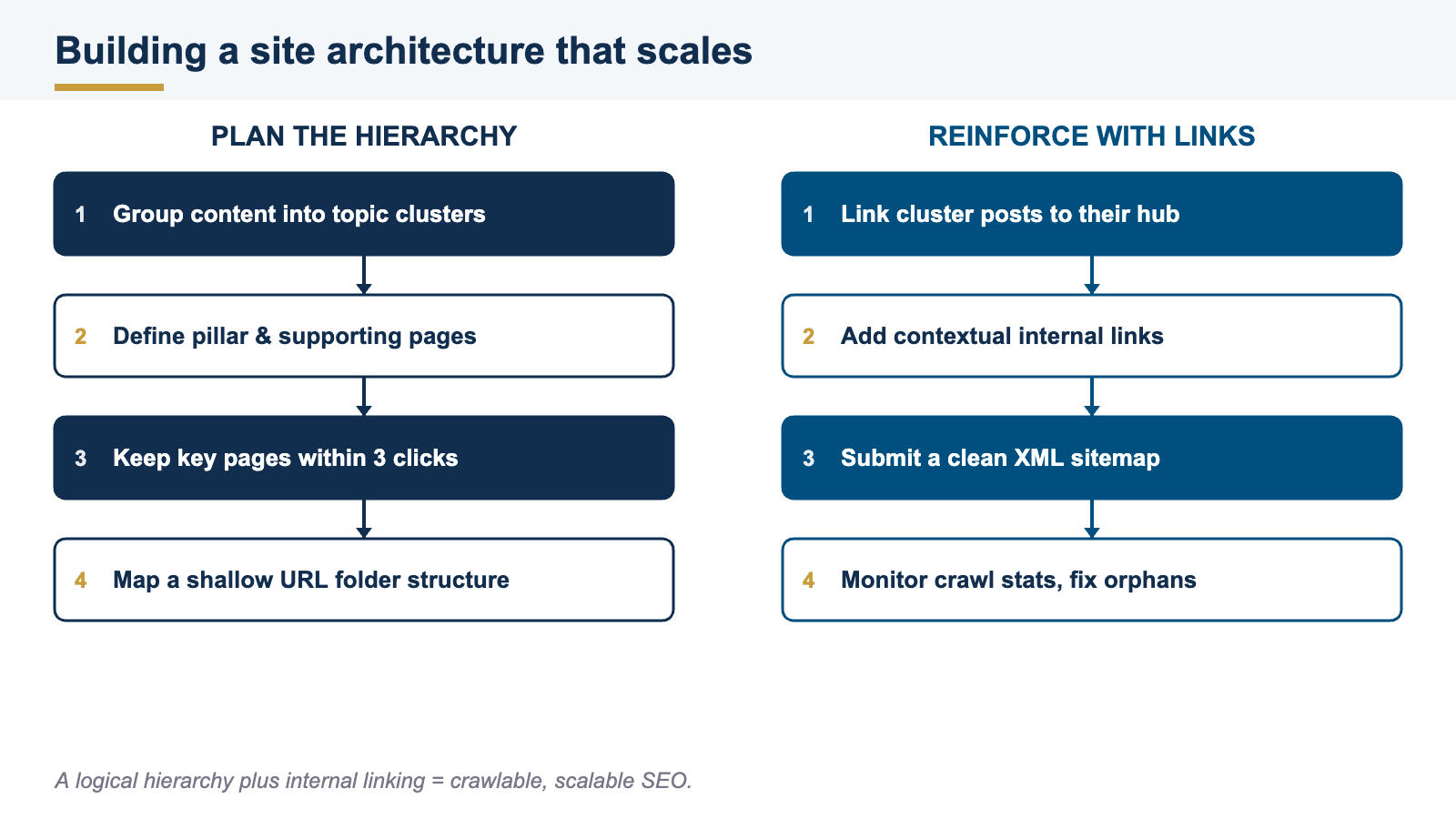
Figure 2: The two-part workflow I use to build (or repair) a scalable site architecture.
- Group every page into a topic cluster with one clear parent section.
- Designate a pillar page per topic and link clusters to it (and back).
- Ensure no key page is more than three clicks from the homepage.
- Use descriptive, folder-based, lowercase URLs — and redirect if you change them.
- Submit a current XML sitemap and hunt down orphaned pages with no internal links.
Structuring for scale
The reason architecture matters more as you grow is simple: a ten-page site forgives almost any structure, but a thousand-page site punishes a bad one relentlessly. If you design the hierarchy and clustering correctly early, adding a new page is trivial — it drops into an existing section, links to its pillar, and inherits a clear path from the homepage. If you don’t, every new page deepens the mess. Investing in structure now is the cheapest SEO work you will ever do, because it prevents expensive migrations later.
Frequently Asked Questions
What is site architecture in SEO?
Site architecture is the way your pages are organized and linked together — the hierarchy from your homepage down to individual articles and product pages, and the internal links that connect them. Good architecture makes it easy for both search engines and people to find any page in as few steps as possible, which improves crawling, indexing, and the flow of ranking signals across your site.
How many clicks deep should important pages be?
As a rule of thumb, keep pages you care about within three clicks of the homepage. The deeper a page sits, the less often search engines tend to crawl it and the less internal link value it receives. There is no hard cutoff in Google’s guidelines, but a shallow, logical structure consistently helps important pages get discovered and refreshed faster.
Does URL structure affect SEO?
URL structure is a modest direct ranking factor, but it matters more for clarity and architecture. Clean, descriptive URLs that mirror your folder hierarchy (for example, /services/seo/ rather than /?p=1427) help users and search engines understand where a page fits. Keep them short, lowercase, hyphenated, and stable — and avoid changing them without redirects.
What is the difference between flat and deep site architecture?
In a flat architecture, most pages are only a couple of clicks from the homepage; in a deep architecture, pages are buried several folders down. Flat structures generally get crawled more thoroughly and pass link value more efficiently, which is why they are preferred for SEO. Very large sites still need depth, but the goal is to keep the click path to any key page short.
How does site architecture help with crawl budget?
Crawl budget is the number of URLs a search engine will crawl on your site in a given window. A clean architecture with shallow depth, a logical hierarchy, and no orphaned or duplicate pages helps search engines spend that budget on pages that matter instead of wasting it. For large sites especially, structure is one of the biggest levers on how completely you get crawled.
MEAN Consultors audits and rebuilds site architecture so your best pages get crawled, indexed, and ranked — based in Jacksonville, FL.