
How Software Outsourcing Works: A Plain-English Client’s Guide
Last updated: July 22, 2026 · By Joseph Olivas, Founder, MEAN Consultors · 8 min read
“Outsourcing” still makes some business owners nervous — visions of losing control, mystery invoices, and code they can’t maintain. In practice, a well-run software outsourcing engagement is one of the most predictable ways to build a product. The confusion usually comes from not knowing what the process actually looks like from the client’s side. So here’s the honest walkthrough I wish more owners had before their first project.
What software outsourcing really means
At its core, software outsourcing means contracting an outside firm or team to design, build, and often maintain software for you. That can range from a single specialist filling a gap on your team to a full partner owning an entire product build end to end. The work can be delivered on a fixed-price basis for well-defined projects or on a time-and-materials basis for evolving ones.
It’s a mature, mainstream way to build. According to Statista Market Insights, the global IT outsourcing market surpassed US$500 billion in 2024 and continues to grow year over year — a scale that reflects how routine this model has become for companies of every size. If you’re still weighing whether to build at all, our guide to Custom Software vs. Off-the-Shelf is the right place to start before choosing a partner.
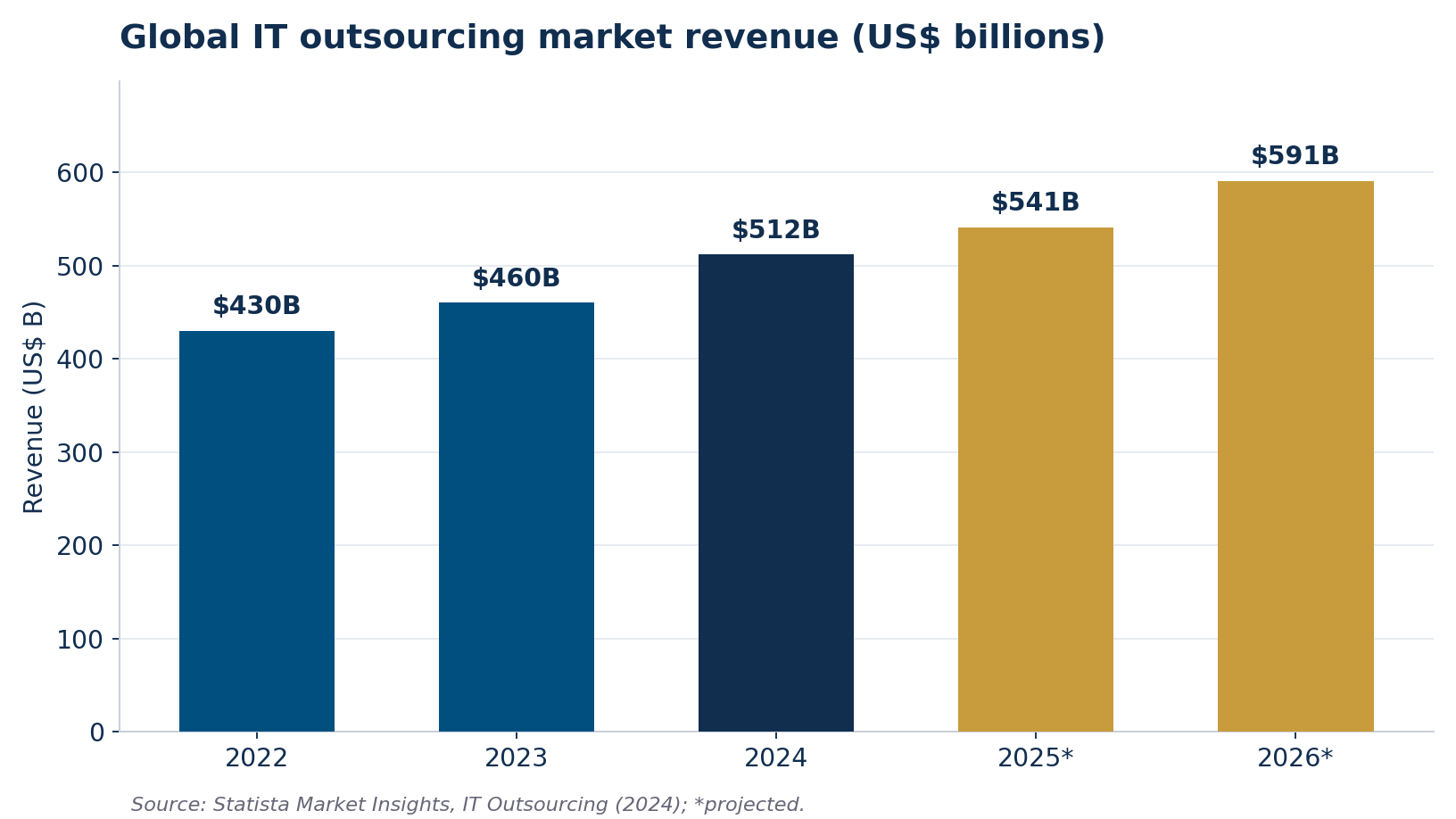
Figure 1: The global IT outsourcing market has grown steadily past US$500 billion, reflecting mainstream adoption.
The main outsourcing models
Not all outsourcing looks the same, and matching the model to your situation is half the battle. These are the arrangements you’ll encounter most.
| Model | How it works | Best for |
|---|---|---|
| Project-based | Fixed scope, fixed price, defined deliverable | Well-defined builds with clear requirements |
| Dedicated team | A team works only on your product, billed monthly | Ongoing products that evolve over time |
| Staff augmentation | Individual specialists join your existing team | Filling a specific skill or capacity gap |
| Managed service | Partner owns delivery and outcomes end to end | Owners who want to stay out of the weeds |
- The global IT outsourcing market passed US$500 billion in 2024 — this is a mainstream, low-risk way to build.
- You keep ownership of the code and control priorities; the partner supplies capacity and process.
- Choosing the right engagement model (fixed project, dedicated team, or staff augmentation) matters as much as choosing the vendor.
The six stages of an outsourcing engagement
Almost every healthy engagement I’ve run follows the same arc. Knowing these stages in advance lets you spot when a vendor is skipping steps — which is usually where projects go wrong.
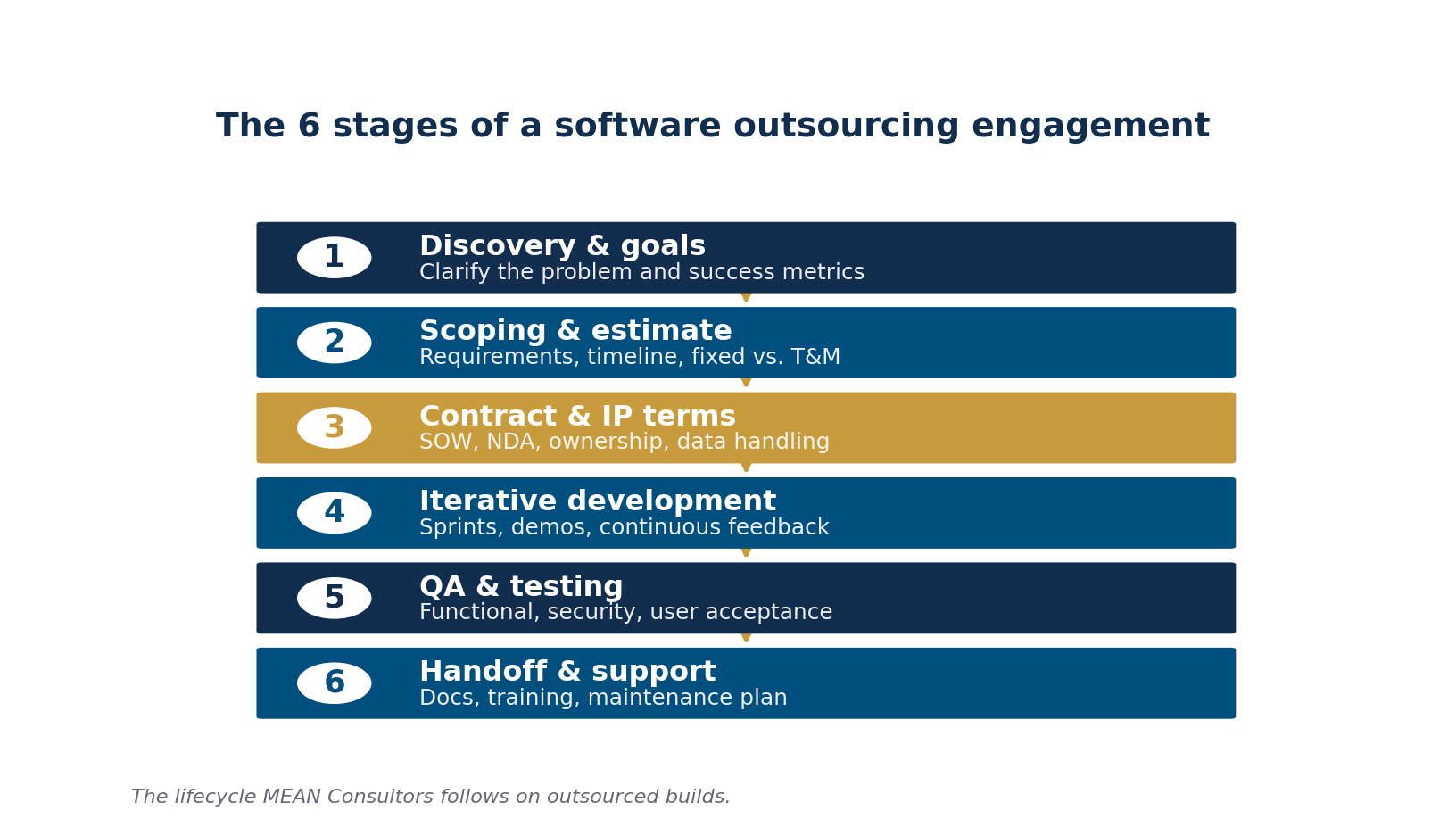
Figure 2: The lifecycle MEAN Consultors follows on outsourced builds.
It starts with discovery, where a good partner pushes past your feature wish-list to understand the actual problem and how success will be measured. Then comes scoping and estimate: requirements are documented, a timeline is drafted, and you agree on whether the work is fixed-price or time-and-materials. The contract and IP stage locks down the statement of work, confidentiality, code ownership, and data handling — the part owners most often rush and later regret.
The bulk of the work happens in iterative development, where features ship in short cycles with regular demos so you can course-correct early. QA and testing then covers functional, security, and user-acceptance testing before anything reaches your customers. Finally, handoff and support delivers documentation, training, and a maintenance plan so you’re never stranded. How rigidly those middle stages run depends on your methodology — a decision we unpack in Agile vs. Waterfall for Custom Software Projects.
How to protect yourself in the contract
The engagement lives or dies on a handful of contract terms. Before you sign, confirm these are explicit and in your favor.
- You own the intellectual property. The contract should assign all code, designs, and assets to you on payment — not license them.
- Source code and repository access. You should hold the keys to your own codebase from day one, not receive it at the end.
- Clear acceptance criteria. Define what “done” means for each deliverable so payment milestones aren’t disputed.
- A defined support and warranty window. Bugs found shortly after launch should be fixed under the original engagement.
- An exit and transition clause. Know how the relationship ends and how knowledge transfers if you part ways.
Onshore, nearshore, or offshore?
Where your outsourcing partner is located shapes cost, communication, and time-zone overlap — three things that quietly determine how the engagement feels day to day. There’s no universally “best” option; there’s only the one that fits your priorities.
Onshore means a partner in your own country. It costs the most but offers the easiest communication, full time-zone overlap, and shared business context — ideal for complex or highly collaborative work. Nearshore means a partner in a nearby country or time zone, which balances meaningful cost savings against still-workable overlap for daily collaboration. Offshore means a partner far away, often at the lowest hourly rate, but with limited time-zone overlap and a bigger communication gap to manage. Many companies blend these — keeping strategy and product ownership onshore while placing execution nearshore or offshore. The right mix depends on how much real-time collaboration your project needs versus how sensitive you are to cost.
The most common outsourcing mistakes to avoid
Most failed engagements I’m asked to rescue share the same handful of preventable errors. Learn them once and you’ll dodge the majority of the pain.
- Choosing on price alone. The cheapest bid often becomes the most expensive project once rework and delays pile up. Weigh value, not just rate.
- Vague requirements. If you can’t clearly describe what you need, no partner can build it. Invest in a proper discovery and scoping phase up front.
- Skipping the IP and code-access terms. Owners who don’t secure ownership and repository access early sometimes find themselves locked out of their own product.
- Going silent between milestones. Outsourcing isn’t “set and forget.” Regular demos and quick feedback keep the build on track.
- No plan for after launch. Software needs maintenance. Agree on support and knowledge transfer before you celebrate the go-live.
Avoiding these comes down to treating outsourcing as a partnership with clear governance rather than a transaction you hand off and hope for. The partners worth working with will welcome that structure, because it makes their job easier too.
Frequently Asked Questions
How does software outsourcing actually work?
You contract an external team to build software for you through a structured process: discovery, scoping and estimate, contract and IP terms, iterative development, QA, and handoff. You define priorities and own the resulting code, while the partner supplies engineering capacity, process, and specialized skills.
Do I own the code if I outsource development?
You should, but only if the contract says so. A proper software development agreement assigns all intellectual property — code, designs, and assets — to you upon payment. Always confirm IP ownership and source-code access in writing before the project begins.
Is outsourcing cheaper than hiring an in-house team?
Often, yes — especially for one-time builds or when you need specialized skills briefly. You avoid recruiting costs, salaries, benefits, and the overhead of an idle team between projects. For long-running products with constant change, a hybrid of in-house and outsourced staff sometimes works best.
How do I keep control of an outsourced project?
Control comes from process, not micromanagement. Insist on short development cycles with regular demos, a single point of contact, clear acceptance criteria for each milestone, and direct access to your own code repository. These keep you informed and able to course-correct early.
What’s the difference between fixed-price and time-and-materials?
Fixed-price suits projects with well-defined, stable requirements: you agree on a scope and cost up front. Time-and-materials suits evolving projects where requirements will change: you pay for actual work done, trading some cost certainty for flexibility. Many engagements start fixed for a discovery phase, then move to time-and-materials for the build.
MEAN Consultors runs transparent, milestone-based software development engagements — you own the code and stay in control the whole way.